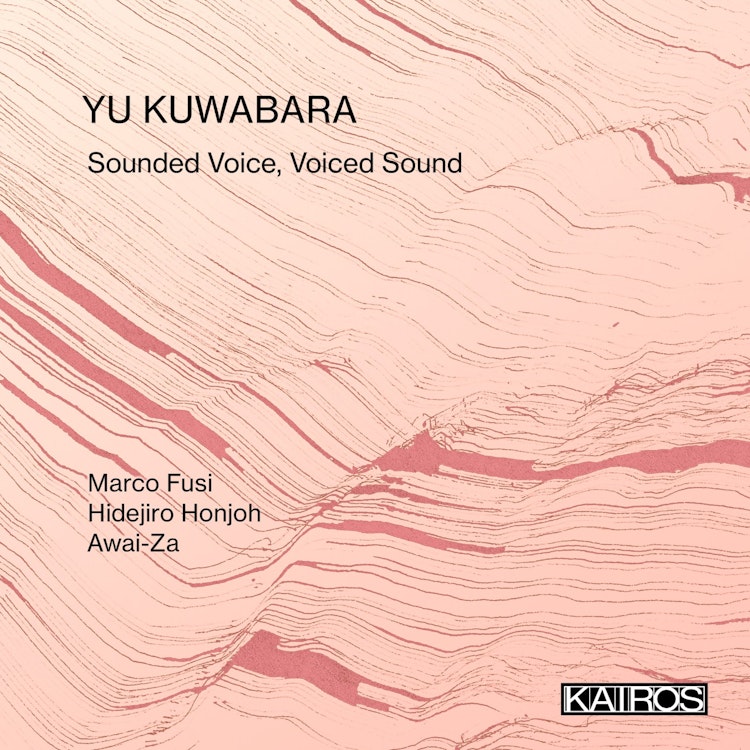
Yu Kuwabara, born in 1984, is a Japanese composer whose musical foundation is built upon Western classical music, with early inspiration from modern composers like Debussy.
Compositional Technique
Kuwabara often uses distinctive scordatura (unusual tunings) for stringed instruments in her works, including violins, viola, cello, and contrabass, to amplify resonance and create unexpected noises similar to the 'sawari' effect on shamisen.
Composer's Artistic Vision
Kuwabara's creative imagination spans 1,000 years, drawing inspiration from Japanese mythology 'Kojiki,' Buddhist chant 'Shomyo,' and Edo songs 'Hauta,' with a particular interest in the energy of the Japanese language.
Composer's Artistic Vision
Kuwabara's approach to Japanese traditional arts involves repeated fieldwork and immersion, contrasting with composers from 60 years ago who often refused to engage with tradition.
Performer Biography
Marco Fusi, the violinist and viola d'amore player on this album, is a researcher in music performance and a passionate advocate for contemporary music, having premiered works by various modern composers.
Recording & Production
Awai-Za is an Edo culture-ingrained, Tokyo-based collective founded in 2010 by Shungo Mise, Seiko Takemoto, Hidejiro Honjoh, and Yu Kuwabara, exploring connections between old and new, sound and verbal, and Japan and the world.
Composer's Artistic Vision
A key motif in Kuwabara's work is 'awai,' a Japanese expression for things being fluid and ambiguously infused but not completely melted together, reflecting a boundary exploration between words and music, and East and West.
You might also enjoy...
Friedhelm Döhl: Musik fur Violine und Cello
Lines Spun
Augustin Braud: Contremouvement
Liza Lim: The Heart's Ear
Bolshoi Theatre Percussion Ensemble
Schäfer: Three Winds and More
Ladislav Kubík: Chamber Music II
Sofia Gubaidulina. Collection
Wolff: Bread and Roses
Cage, J.: Sonata for 2 Voices / One4 / Wolff, C.: Pulse / Trio I / Walter, C.J.: Reigen (Trumpet and Percussion)
Furrer 70 (Special Edition)
Waning Crescent
Trawl
Finnissy: Unknown Ground - Kritik der Urteilskraft - À propos de Nice