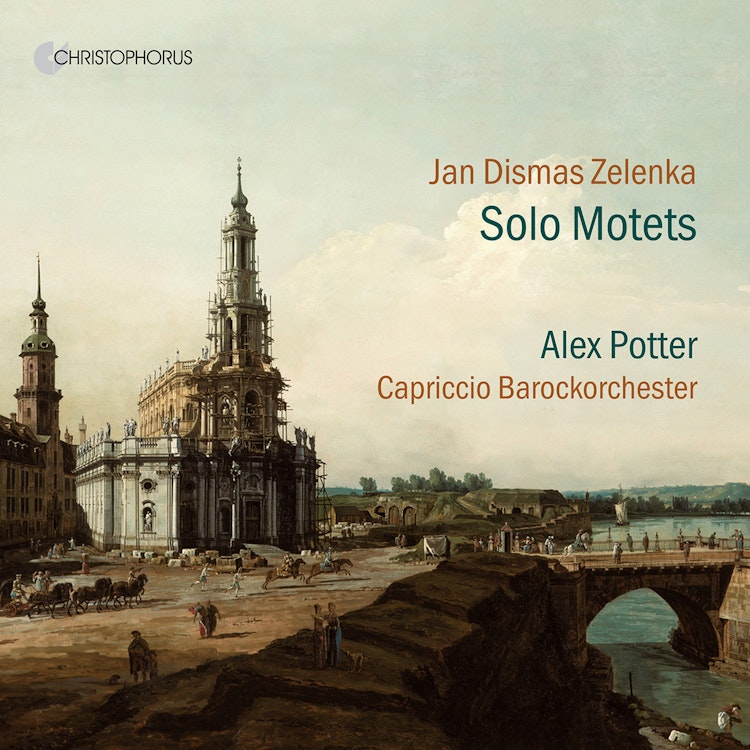
The Dresden court church, where Zelenka worked, was open to the public and its music initially came from printed part books or was borrowed.
Composition History
Zelenka kept an 'Inventarium' (a catalogue of his works) starting in 1726, likely hoping to become court composer rather than just an instrumentalist.
Composer's Artistic Vision
Zelenka's early fame was based on instrumental compositions, but his standing was further enhanced by his large and small-scale sacred works.
Historical Context
From the 1720s, the Dresden Hofkapelle (court orchestra) began performing sacred works by composers like Johann David Heinichen, Giovanni Alberto Ristori, and Zelenka, leading to a 'Blütezeit' (flourishing period) of repertoire.
Compositional Technique
Zelenka's motets often feature strong and interesting writing for solo bassoon, suggesting he had access to an outstanding bassoon player in the 1730s.
Recording & Production
This album was recorded in February 2012 at the Reformierte Kirche (Reformed Church) in Arlesheim, Switzerland.
Composer Biography
Jan Dismas Zelenka, a Bohemian contre-basse player, arrived in Dresden in or before 1711, where the Catholic court church had only recently been established.
You might also enjoy...
Fasch / Graupner: Bassoon Concertos
Telemann And The Baroque Gypsies
Taffel Consort - Instrumental Works by Thomas Simpson & William Brade