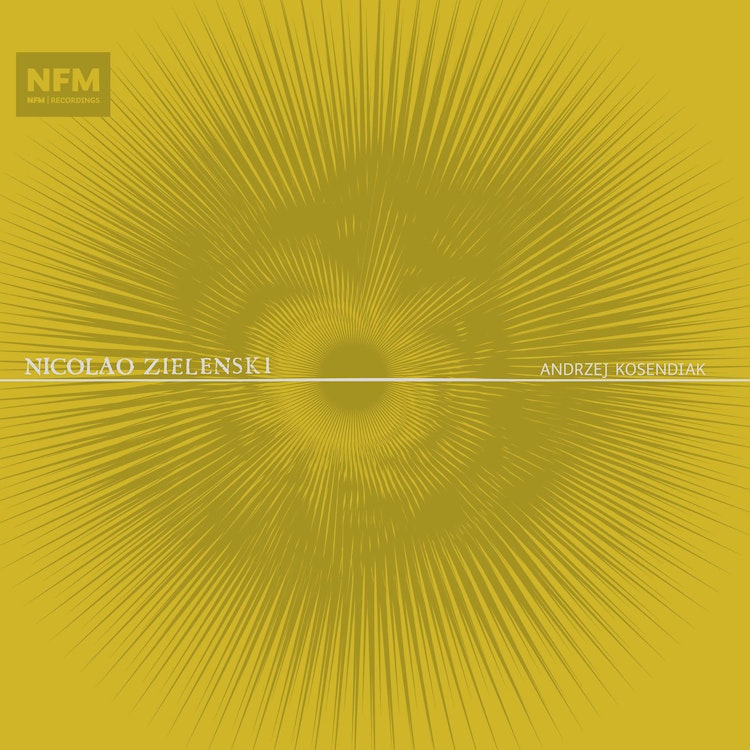
Zieleński: Offertoria et communiones totius anni (Excerpts)
8/7/2020, 15 Tracks, 48:34
Featuring
Aldona Bartnik
Aleksandra Turalska
Bart Uvyn
Piotr Olech
Piotr Łykowski
Benjamin Glaubitz
Florian Cramer
Maciej Gocman
Jaromír Nosek
Jerzy Butryn
Szczepan Nowak
Tomáš Král
Zbigniew Pilch
Mikołaj Zgółka
Piotr Chrupek
Krzysztof Karpeta
Julia Karpeta
Jarosław Thiel
Anton Birula
Přemysl Vacek
Bruce Dickey
Masafumi Sakamoto
Ferdinand Hendrich
Karl Heinrich Wendorf
Maximilian Ehrhardt
William Lyons
Aleksandra Rupocińska
Marta Niedźwiecka
Andrzej Kosendiak
Wrocław Baroque Ensemble
Mikołaj Zieleński
Did you know?
1/7
Recording & Production
The conductor, Andrzej Kosendiak, chose to arrange the album's compositions to tell a narrative about the life of Jesus Christ, deviating from the liturgical calendar order.
Compositional Technique
Zieleński's Communiones feature a rich array of suggested instruments, including organ, violin, cornett, bassoon, trombone, lute, and harp, a diversity unmatched by other early Baroque Polish composers.
Composition History
Mikołaj Zieleński's two-part work, Offertoria totius anni and Communiones totius anni, was published in 1611 by Giacomo Vincenti in Venice, a major European music center.
Historical Context
Venice was a crucial center for music in the 16th century, known for its talented musicians at St Mark's Basilica, instrumental music development, polychoral techniques, and music printing houses.
Composer's Artistic Vision
Zieleński's work demonstrates an excellent understanding of Italian compositional techniques from the late 16th century, possibly gained during a visit to Italy with his patron, Bishop Baranowski.
Composer Biography
Mikołaj Zieleński, a Polish composer, served as Kapellmeister and organist for Wojciech Baranowski, the Archbishop of Gniezno and Primate of Poland.
Interpretation
For this recording, the highest vocal parts are performed by female sopranos, which was likely contrary to common practice at the turn of the 16th and 17th centuries.
You might also enjoy...
Margaret Bonds: Credo; Simon Bore the Cross
Killmayer: Missa Brevis - Harrison: Mass
Leontyne Price - My Favorite Hymns
Mosonyi: Mass in C Major / Consecrated Graves / in Memory of Count Batthyany
Mondonville: Grands Motets
Steffani: Stabat Mater
Hummel: Mass in D Major / Te Deum
Alessandro Scarlatti: Responsories For Holy Week - Holy Saturday
Alessandro Scarlatti: Responsories for Holy Week - Holy Saturday