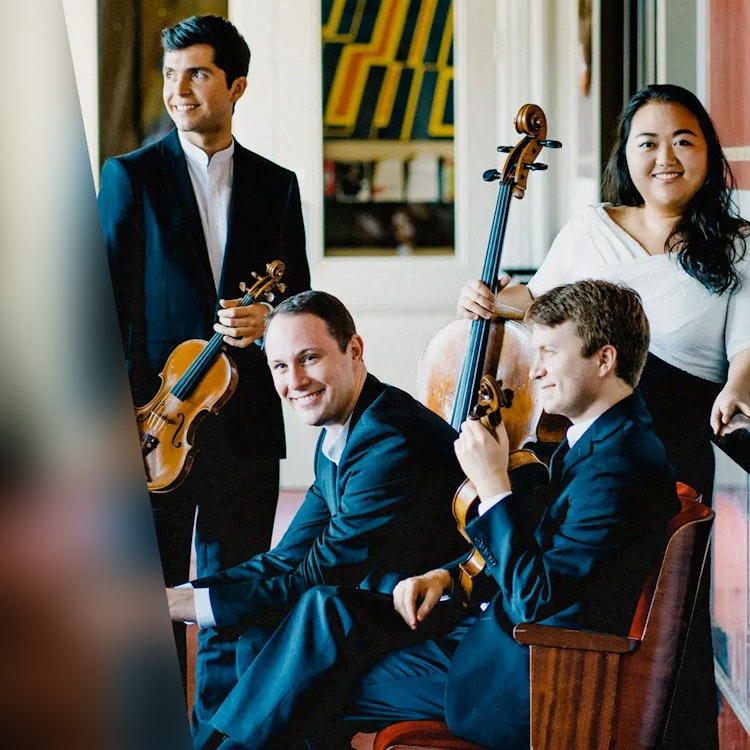
Calidore String Quartet: Our Top Five
The internationally acclaimed Calidore String Quartet shares their top five string works in an exclusive playlist for IDAGIO. From the timeless cycles of Beethoven and Mendelssohn to striking works by contemporary composers, the quartet relishes in a wide selection of repertoire and an impressive list of collaborators. As prizewinners of multiple competitions, including the Grand Prize at the Fischoff National Chamber Music Competition, they have also served as ensemble-in-residence at several leading universities and focus on mentoring the next generation.
Edward Elgar: Concerto for Violin and Orchestra in B minor op. 61, I. Allegro – Yehudi Menuhin
Recorded at just 16 years of age, this is a miraculous performance. Young Menuhin’s playing combines effortless instrumental fluency with the most soulful style of playing. The music seems to be inextricably linked to him. He is a pure vessel for the composer’s intention yet still communicates his clearly identifiable voice.
Franz Schubert: String Quartet No. 14 in D minor D 810, IV. Presto – Artemis Quartett
The hallmarks of the Artemis approach are on full display throughout their entire survey of Schubert’s quartets. This last movement of the 14th quartet in particular, from the incisive and varied sense of articulation, driving musical energy, impeccable ensemble and perhaps most captivating, their chord playing. Each major harmonic pillar is so powerful and full turning four into the sound of a symphony orchestra.
Johannes Brahms: String Quartet No. 1 in C minor op. 51/1, IV. Allegro Tokyo String Quartet
The quartets of Brahms are notoriously difficult to interpret successfully. The Tokyo interpretation is definitive for their clarity of balance without sacrificing the drama and pathos of these works. The last mov (Allegro) of No. 1 pairs bombastic verve with heartfelt tenderness and warmth. Like the Artemis recording of Schubert, much of our early learning as quartet came from our admiration and appreciation of these recordings and studying how these artists managed to bring the composer’s voice to life so vividly.
Ludwig van Beethoven: String Quartet No. 16 in F major op. 135, III. Assai lento, cantante e tranquillo – Alban Berg Quartett
Gunther Pichler of the Alban Berg was one of our most formative mentors. He made us aware of the traditions of interpreting Beethoven’s music that aid in interpretation of his text. These nuances are on exhibit in this glorious slow movement from op. 135: the undulation of the opening theme, desolation of color in the middle section, long sense of line without smothering the hierarchy of the beat structure and complete transparency of balance within the quartet.
Dmitri Shostakovich: String Quartet No. 9 in E flat major op. 117 (1964), I. Moderato con moto – Emerson String Quartet
It is incredible to hear the verve and precision of these performances which were all recorded live. The Emerson are very important mentors for our quartet and a huge artistic inspiration. The dry sardonic characters mixed with the capricious and dark all come alive in this vibrant interpretation. The clarity of their ensemble and power of the musical effects are truly definitive in all repertoire but especially here in this complete cycle of Shostakovich.