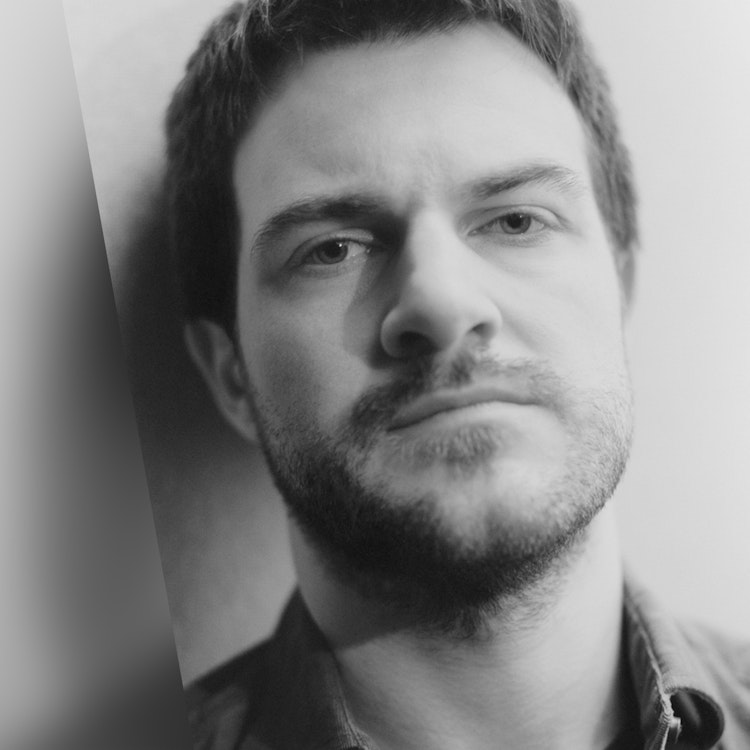
Carlos Cipa: Solo Piano Favourites
Carlos Cipa is a classically trained pianist and composer that draws influence from various genres like rock, pop, jazz, and electronic music to shape his unique style. He explores the distinct acoustic qualities of different pianos in his compositions, driven by boundless curiosity and innovative experimentation. Alongside his recent recording of Hans Otte’s 'The Book of Sounds,' Carlos Cipa takes us through some of his favourite piano solo works.
For this selection of music, I wanted to focus on the theme of solo piano with a collection of my favourite recordings and works with a broad view of this theme.
As a recording artist, my main focus in recent years has been to record many different-sounding pianos from different eras and bring them together. So this aspect was one of the main factors for this selection, with the choice of fantastic recordings of historical instruments as well as modern grand and upright pianos.
As a composer, I usually work with minimal aspects, and I wanted to show that classical music from different eras also has minimalist aspects in its compositional style and also works with repetition and patterns. I therefore compiled a colourful collection of works from the baroque, early classical, classical, impressionist and 20th and 21st century music.
Ryuichi Sakamoto's 'Andata' is one of the most beautiful pieces of recent years, so sparse and simple yet timeless and effective.
The Bach 'Overture in a French Mater' is one of the lesser known pieces but actually one of my favourite pieces and so beautifully played by András Schiff.
Ann Southam's 'Glass Houses' is one of the most underrated pieces of (minimal) music of the 20th century. It is incredibly challenging for the pianist and has in some way a very baroque manner. Because she was a female composer she wasn't as celebrated compared to her male contemporaries, and she didn’t have the chance to write those big orchestral pieces, but in her piano solo works you can hear her very idiosyncratic style.
Ravel's 'Gaspard de la Nuit' is such a minimal piece of music, right? But at the same time it's of course kind of maximalist, too. The details of the composition need to be brought out at the finest level and this recording by Arturo Benedetti Michelangeli is actually one of my favourites, also because the way of recording adds so much nostalgia.
For me, Schubert is one of the most underrated composers of classical music in general - of course he is performed all over the world all the time, but rarely is he mentioned next to the big masters. Personally I think the emotional depth he created with his music is unmatched. This rather unknown piece is one of my favourite piano pieces and in this recording performed by my personal favourite pianist Mitsuko Uchida.
Another (kind of) minimal composer, Julia Wolfe, with a very sparse and little piece that shows her approach that always finds a balance between the most beautiful and a certain roughness and ferocity.
Kurtág is the master of reduction, I think one of the best composers of the 20th century. His music is never pretentious, but always highly musical even in the most disturbing moments. And I think it is captured very nicely in this recording of Vikungur Olaffson, even though I can't decide if I like the Upright or the Grand version more, but of course this album concept is right up my alley.
Same goes for the Alexander Melnikov record, where he recorded pieces on 7 different pianos. This CPE Bach classic sounds mind-blowing on the Tangentenflügel. The different sounds of the piano are bringing so much more depth to the piece.
The little Messiaen piece 'La colombe' was one of the first pieces of 20th century music I learned as a child and I still think it's a very beautiful and fresh piece of music.
Bach's 'Sarabande from French Suite no. 5' is one of my favourite pieces of music to play. I once heard it as an encore in a quite demanding concert of Schumann pieces and it came across so naturally that I immediately wanted to play it.
The Lubimov/Silvestrov recording is one of the most important recordings of recent years. Of course there is this incredibly demanding and yet incredibly beautiful music, but the political aspect of it also shows what music can actually achieve.
To conclude this collection, I wanted to end with a piece that might be considered overused, but in this recording by Alexei Lubimov on a historical piano, the piece sounds so interesting again that you can find a new love for it.