Donald Berman's Favourite Ives
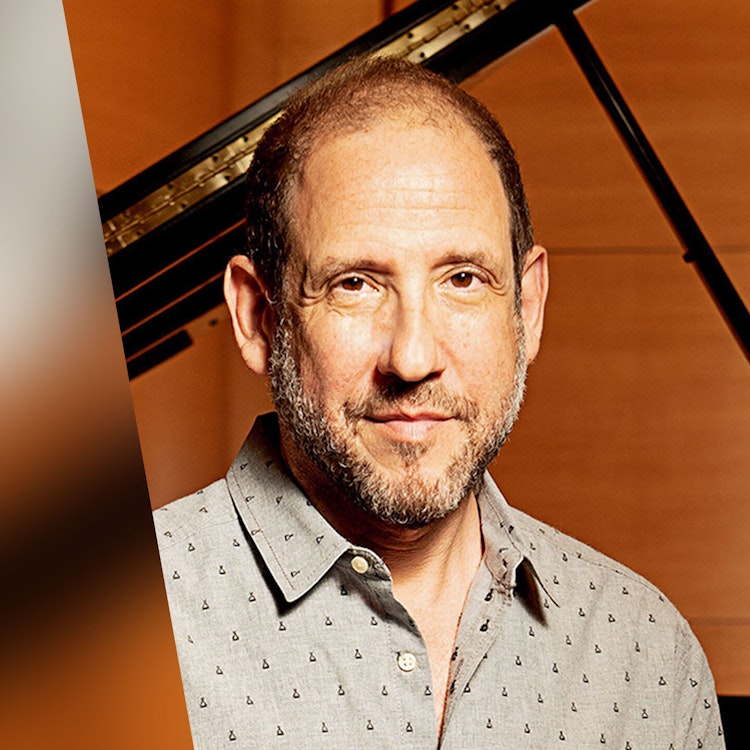
American pianist and president of the Charles Ives Society Donald Berman shares his most cherished recordings in an exclusive playlist. Celebrating 150 years since his birth, Ives's innovative spirit continues to inspire, showcasing the enduring impact of his music.
Sonata for Violin and Piano No. 2
Late in college I studied with John Kirkpatrick, the legendary pianist who premiered Ives’ “Concord” Sonata in 1939. I was his only student and he was my only teacher for three years. Early in my work with him he handed me a double LP of the complete Ives Violin Sonatas he had recorded with the violinist Daniel Stepner. Kirkpatrick signed the album, “To Donald Berman with High Hopes for the Future.” Dan and I are now friends and have also played these works together. The performances of the violin sonatas by John and Dan on this recording are to me the most authentic versions of the piece. The 2nd Violin Sonata evokes the spirit of communities gathering , singing hymns (the first movement “Autumn”), breaking into dance (“In the Barn”) and celebrating a spiritual awakening (“The Revival”).
Variations on "America"
Ives was a monster organist, cutting his teeth as a renegade teenage church musician. He first astonished churchgoers with his improvised “Variations on America” when he was 18. Some of the music goes into two keys at once, a kind of game he learned from his father George Ives, an inventive bandleader in Danbury, CT. First recorded by the powerhouse organist E. Power Biggs, the recording here is by Hans-Ola Ericsson.
The Unanswered Question
My world was turned inside out when I first heard Ives’ “The Unanswered Question.” It was unlike anything I had ever heard – the gorgeous far off chorale of the strings sounding like a quiet eternity, against wind players crying into the void. Played here by the Music Director emeritus of the Ives Society, Michael Tilson Thomas, conducting the San Francisco Symphony.
Study No. 20: March (Slow Allegro or Fast Andante
The first piano piece of Ives I played, not too long after my teacher Kirkpatrick published it. I was thoroughly engaged by the polyrhythms and the extremely funny trio that begins with a prosaic vamp of chords interrupting the crazed counterpoint midway through the piece. After the mash-up of tunes in the trio, Ives proceeds to repeat the sections of the first half in reverse order. I made this recording in 1999, years after I first encountered it with Kirkpatrick.
The Celestial Railroad
My favorite shorter piano piece of Ives, a programmatic one that takes Hawthorne’s short story “The Celestial Railroad” as its inspiration. In the story, pilgrim travelers are fooled by the character Mr. Smooth-Away into taking an all-too-easy transport to heaven in the form of a modern railroad. Along the way the passengers catch glimpses of Vanity Fair and Beulah Land before crashing into oblivion. This performance is on the second volume of The Unknown Ives, a recording I made for New World Records in 2004.
Feldeinsamkeit (In Summer Fields)
Ives took on Brahms while in college, setting the same text by Herman Allmers that Brahms had scored just a decade before. The poem’s protagonist is lying in the fields watching the clouds go by, dreaming of eternal space. Brahms brought out the existentialist tremor of the hero; Ives, ever the optimist, captures the movement of clouds and grass and the wonder of the pastoral view. I made this recording with my friend Susan Narucki, whose singing moves me to the core with her vocal intimacy and emotional truth.
The Light that is Felt
This is a recording of Ives’ songs Susan Narucki and I made in 2008. The title song is set to the poem by John Greenleaf Whittier. It captures the essential wholeness of childhood, parenthood and spirituality in two and-a-half minutes.
Orchestral Set No. 1: Three Places in New England, 3. The Housatonic at Stockbridge
This third movement from Ives’ “Three Places in New England” captures the many rhythmic and harmonic layers of the Housatonic, a swirling river in Stockbridge, MA. The river travels past a church, from which we hear a line from the hymn “Dornance” - “Contented river in thy dreamy realm” - played by the french horn. The piece commemorates a walk Ives took with his wife Harmony as they embarked on their lifelong partnership. Played here by the Ives champion Leonard Slatkin conducting the St. Louis Symphony.
Orchestral Set No. 2, 3. From Hanover Square North, at the End of a Tragic Day, the Voice of the People Again Arose
My favorite work by Ives, capturing a spontaneous communal response to the sinking of the Lusitania in 1915. Ives himself took a train to and from work every day, and the piece evokes not just the commuters breaking into the song “In the Sweet By and By” but also the intensity and force of the arriving and quickly departing train. Here played by the Malmö Symphony Orchestra and Chamber Chorus, conducted by Ives champion and Ives Society Executive Editor, James B. Sinclair.