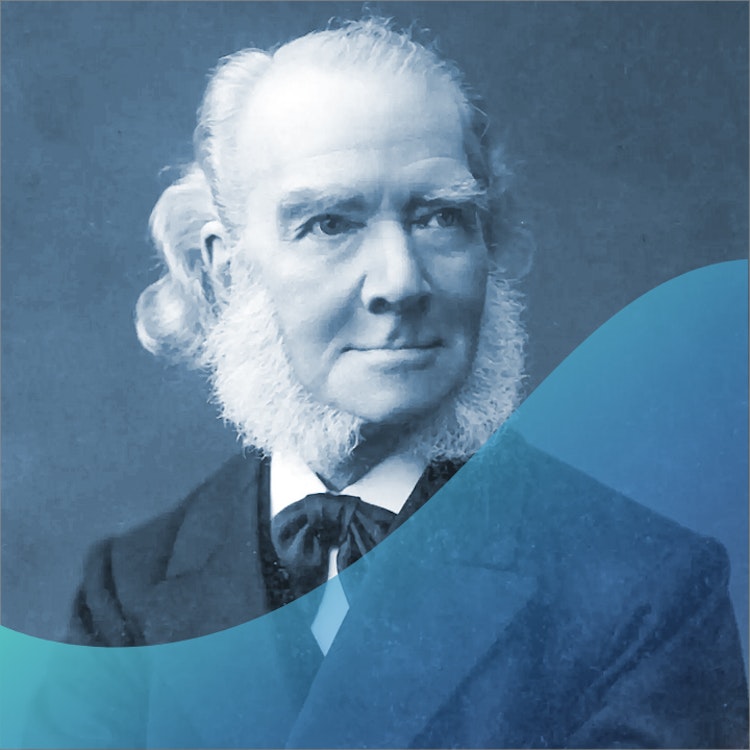
Essential Reinecke
Carl Reinecke studied piano first under his father and later with Felix Mendelssohn Bartholdy, Robert Schumann and Franz Liszt. Reinecke was recognized as a piano virtuoso, with several tours of Europe, as well as writing a massive catalogue of almost three-hundred compositions. His works, like the captivating "Undine" flute sonata, symphonies, and concertos, showcase his admiration of Viennese classics, deeply influenced by his reverence for Mozart and friendship with Robert Schumann. As a mentor to renowned composers like Edvard Grieg and Max Bruch, Reinecke's music offers a delightful experience of 19th-century classical traditions.
Carl Reinecke began his musical education at the age of six under his father's guidance, making his debut at twelve as a pianist in 1835 and subsequently touring Europe. He was highly regarded as an excellent interpreter of Mozart’s piano music and, less formally, as an accomplished violinist. Supported by a scholarship from the Danish King, he continued his studies in Leipzig, Germany, where he was mentored by Felix Mendelssohn Bartholdy. Reinecke's professional career included roles as a Royal Court Pianist in Copenhagen, conductor in Bremen and Barmen, teacher of piano, composition, and singing at the Leipzig Conservatoire, and ultimately as conductor of the Leipzig Gewandhaus Orchestra from 1860 to 1895.
Reinecke's compositional style was conservative, heavily influenced by the Viennese classics, particularly Mozart, and he maintained a close relationship with Robert Schumann. His notable compositions include the glittering “Undine” flute sonata, symphonies, operas, and concertos for flute and harp, along with numerous chamber works. Following his tenure at the Gewandhaus, Reinecke embarked on successful concert tours and continued his teaching position at the Leipzig Conservatoire. His legacy endures through his students, who include prominent composers such as Max Bruch, Edvard Grieg, Leoš Janáček, Ethel Smyth, and Frederick Delius.