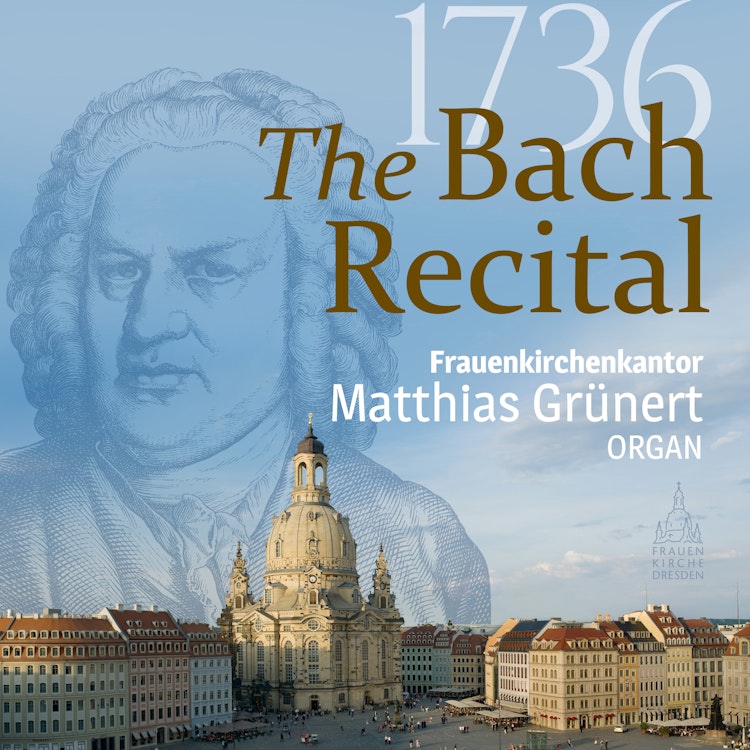
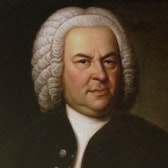
Bach received the title of court composer in 1736, partly due to his dedication of the Kyrie and Gloria from his Mass in B Minor BWV 232 to August II.
Composition History
The Aria from the Goldberg Variations BWV 988 was supposedly composed by Bach for Count Hermann Carl von Keyserlingk, a Russian diplomat, to help him with sleepless nights.
Performer Biography
Matthias Grünert, the organist on this recording, was the first cantor of the rebuilt Dresden Frauenkirche in 2004 and founded its choir, chamber choir, and Ensemble Frauenkirche.
Compositional Technique
Bach's Toccata and Fugue in D minor BWV 538 is heavily influenced by the Italian concerto style, with the Toccata functioning as an elaborate concerto movement.
Composition History
Bach's Prelude and Fugue in G Major BWV 541 was composed to help his son, Wilhelm Friedemann Bach, secure an organist position at the Dresden Sophienkirche.
Historical Context
On December 1, 1736, Johann Sebastian Bach tried out a new organ by Gottfried Silbermann at the Dresden Frauenkirche, a church later destroyed in WWII and rebuilt.
Composer's Artistic Vision
The organ of the Frauenkirche is crowned with a cartouche featuring the letters SDG (Soli Deo Gloria), a phrase Bach often used in his works to give praise to God.
You might also enjoy...
Bach: Organ Works, Vol. 10 & 11 (At the Organ of Saint Walburgis Church in Zutphen)
Complete Organ Works & Other Keyboard Works 1: Toccata in D minor and other early works vol.1 (Bach)
Bach, J.S.: Organ Works, Vol. 6
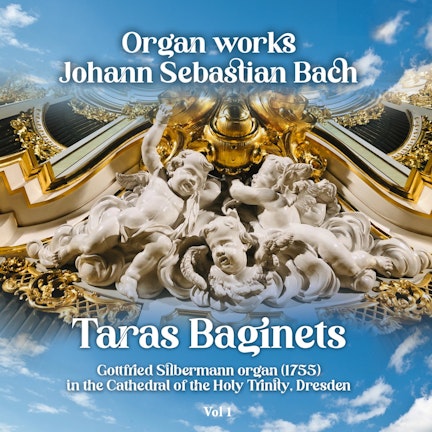
Johann Sebastian Bach: Organ Works Vol. 1 (Gottfried Silbermann Organ from 1755 in the Court Church of Dresden)
50°55'12.4"N 13°20'36.7"E (Bach Organ Landscapes / Freiberg)