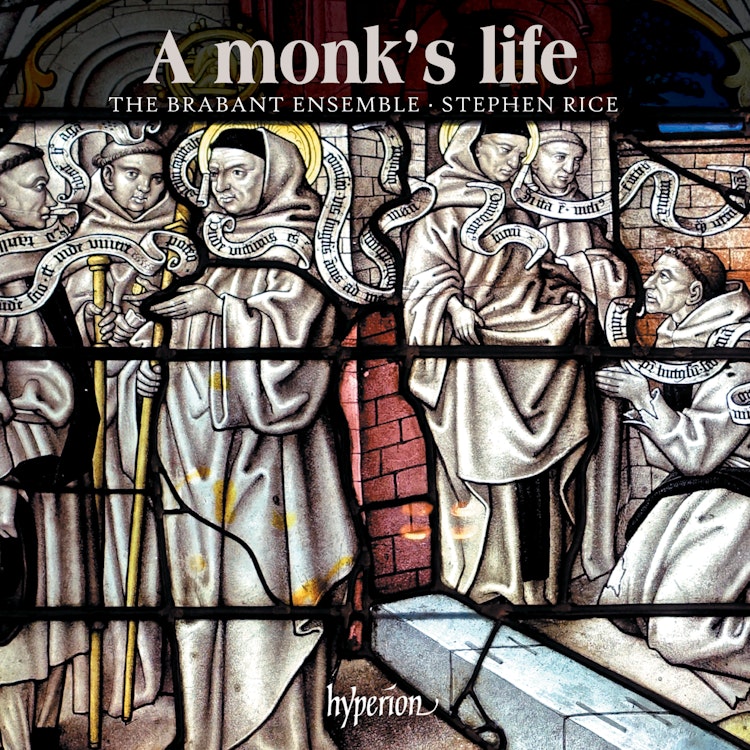
This album, titled "A monk's life," charts the life cycle of a monk through the music he might have heard, sung, or composed.
Compositional Technique
Bernhard Klingenstein, Kapellmeister of Augsburg Cathedral, used word-painting in his motet De vita religiosa, such as runs for 'gets up more quickly' and meandering chords for 'rests more securely'.
Historical Context
After the Reformation and the Council of Trent, monasteries in German-speaking countries were expected to contribute to the religious regeneration of the Catholic Church.
Composition History
The motets Sponsa Dei and Quis rutilat Triadis? by Orlande de Lassus, music director of the Munich court chapel, originally had secular texts praising Emperor Maximilian II and Duke Albrecht V.
Compositional Technique
Carolus Andreae, abbot of Irsee, created a Magnificat based on Jacob Reiner's motet Si ignoras te, which alternates between chant and polyphony and uses polychoral effects.
Historical Context
Music played an important part in monastic life, serving as both a tool of discipline and a source of spiritual joy, with daily prayers sung diligently and devoutly.
Cultural Impact
The cliché of the inebriated monk existed from the Middle Ages to the nineteenth century, and a contrafact of Giacomo Gastoldi's dance song in praise of wine captures the jolly mood of carnival season in the cloister.
You might also enjoy...
The Tallis Scholars Sing Thomas Tallis
Tallis: Spem in alium; The Lamentations of Jeremiah