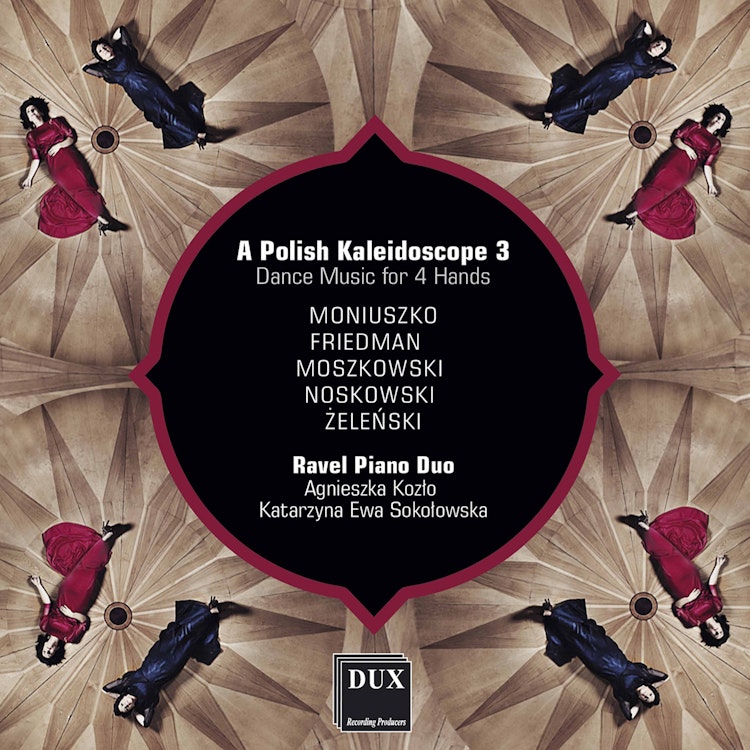
The composers featured on this album, including Stanisław Moniuszko, Władysław Żeleński, Zygmunt Noskowski, and Maurycy Moszkowski, shared excellent technique and an individual approach to harmony, distinct from broader European trends.
Compositional Technique
The social purpose of 19th-century dance music led to simple forms, clear harmonies, and distinct rhythms, determined by dance steps and figures.
Historical Context
In the 19th century, amateur music-making became widespread, especially with the piano, which democratized music previously limited to the aristocracy.
Compositional Technique
Maurycy Moszkowski's 1879 Spanish Album features various techniques to imitate the guitar on the piano, such as repeated notes for tremolos and recurring chords for rasgueados.
Historical Context
The popularity of the piano led to a decline in amateur string and wind instrument playing, as composers responded to market demand for four-hand piano music for bourgeois salons.
Cultural Impact
The legacy of these Polish composers includes the foundation of excellent orchestras, chamber ensembles, and music academies, shaping the overall organization of music life in Poland.
Composer Biography
Maurycy Moszkowski, despite being described as a German pianist of Polish origin, maintained extensive contacts with Poland, performed in Warsaw, and supported Polish music organizations.
You might also enjoy...
Beethoven and His Teachers
Dances for four hands
Unknown Russian Four Hand Piano Music
Moscheles: Grande Sonate symphonique No. 2 in B Minor, Op. 112
Glazunov: Music for Piano 4-Hands and 2 Pianos
A Polish Kaleidoscope: Piano Works for 4 Hands
Dvořák: Complete Works for Piano 4 Hands, Vol. I
Brahms: Klavierduo
Four Hands On Stage
Onslow, G.: Sonatas for Piano 4 Hands Nos. 1 and 2