Beethoven's Grosse Fuge, Op. 134, was originally the last movement of his String Quartet in B flat major, Op. 130, and he created the four-hand arrangement himself, rejecting another version.
Compositional Technique
Four-hand music on a single piano fostered a close physical and social relationship between participants and audiences, and served as a vehicle for transmitting musical traditions.
Historical Context
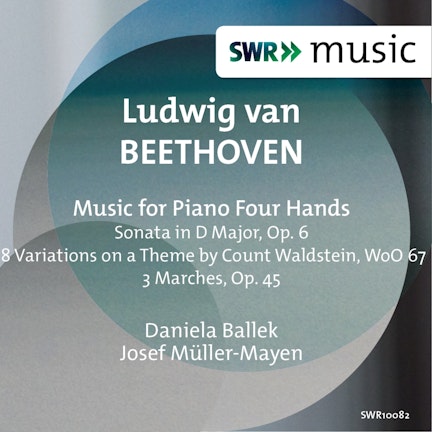
The publication of Beethoven's Three Marches, Op. 45, in 1804 was timely, occurring the year before the first Napoleonic invasion of Vienna.
Interpretation
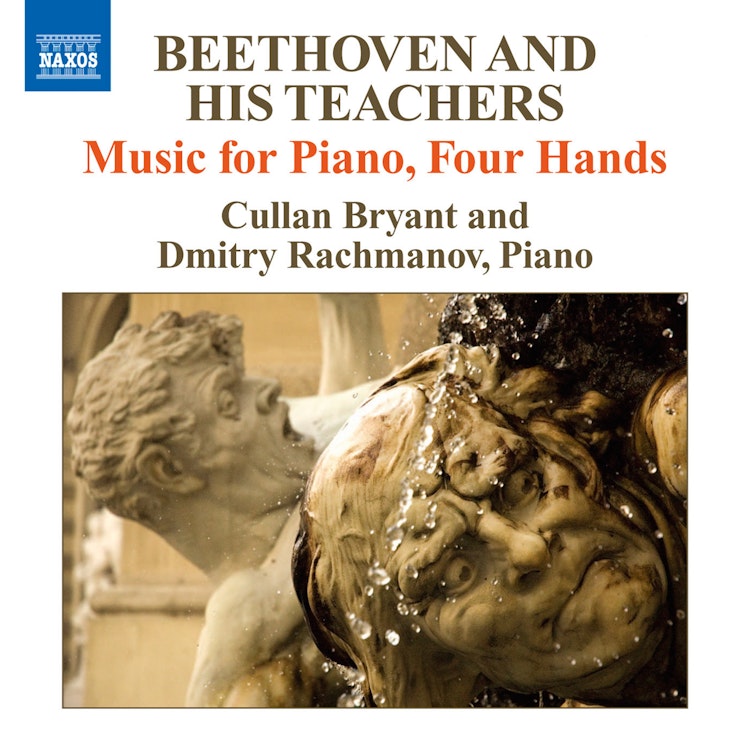
The performers, Cullan Bryant and Dmitry Rachmanov, explore the interrelationships between the keyboard music of Beethoven and his principal teachers, culminating in Beethoven's own keyboard arrangement of the Great Fugue.
Instruments
The recording uses two period pianos from the Frederick Historic Piano Collection: a Caspar Katholnig (c.1805-1810) from Vienna and a Johann Nepomuk Tröndlin (1830) from Leipzig.
Composer Biography
Beethoven's first significant composition instructor was Christian Gottlob Neefe, who taught him thoroughbass and introduced him to Bach's Well-Tempered Clavier.
Recording & Production
This album features world premiere recordings of Christian Gottlob Neefe's Six Easy Pieces from Mozart's opera Die Zauberflöte, Johann G. Albrechtsberger's Prelude and Fugue in B flat, and Ludwig van Beethoven's Six Variations in D on the Air Ich denke dein.
You might also enjoy...
Beethoven: Complete Works for Piano Duet
Beethoven: Complete Works for 4-Hand Piano
Dussek: Complete Original Works for Piano Four-Hands
Boundless: Beethoven Complete Works for Piano Four Hands