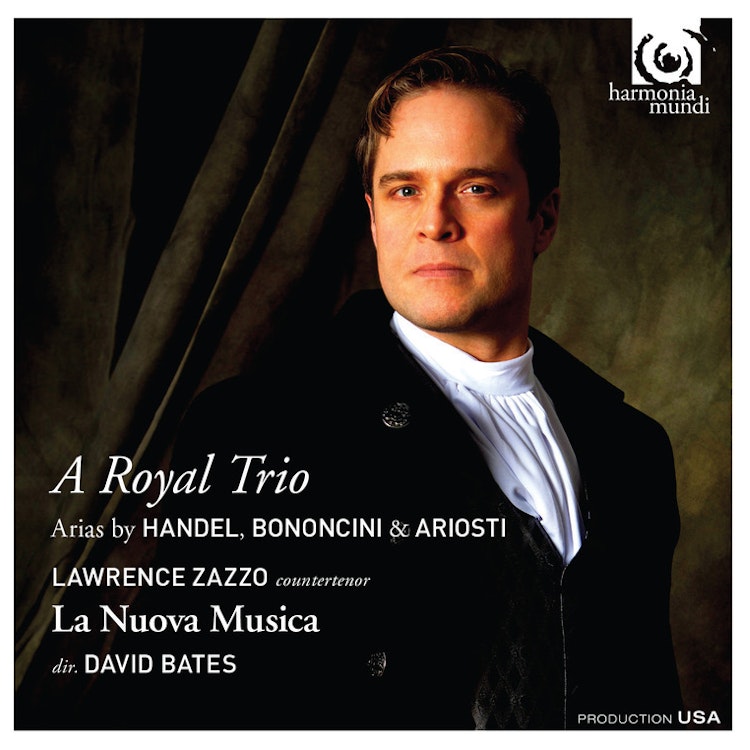
A Royal Trio: Arias by Handel, Bononcini & Ariosti
10/20/2014, 18 Tracks, 1:18:07
Featuring
David Bates
Lawrence Zazzo
La Nuova Musica
Attilio Ariosti
George Frideric Handel
Giovanni Maria Bononcini
Antonio Maria Bononcini
Did you know?
1/7
Historical Context
The Royal Academy of Music, a joint-stock company, was established in London in 1719 by 73 British aristocrats to produce Italian opera.
Historical Context
After the Royal Academy of Music's collapse in 1728, George Frideric Handel gained sole artistic responsibility for opera in London, diversifying operatic subjects and introducing English oratorios.
Critical Reception
In 1723, John Gay complained that the London public had become obsessed with music, debating the styles of Handel, Bononcini, and Ariosti, and voting the castrato Senesino 'the greatest man that ever lived'.
Composer Biography
Attilio Ariosti, a third principal composer for the Royal Academy, was a monk, composer, multi-instrumentalist, and diplomat.
Composer Biography
George Frideric Handel, who had been living in London for seven years, was appointed the salaried 'Master of the Orchester' for the Royal Academy of Music.
Recording & Production
For this recording, the performers created a hybrid version of Bononcini's 'Così stanco pellegrino' from Crispo, combining three existing delightful versions.
Historical Context
Giovanni Bononcini, a Modenese cellist, was already popular in London before joining the Royal Academy of Music; his opera Il trionfo di Camilla had been performed 63 times between 1706 and 1709.
You might also enjoy...
Lully, Charpentier & Desmarets: Passion
Vivaldi "Pyrotechnics" - Opera Arias
Handel: "Mezzo Soprano" - Opera Arias
Beauty Of The Baroque
Handel: Tolomeo, re d'Egitto, HWV 25, Act 1: "Torna sol per un momento" (Tolomeo)