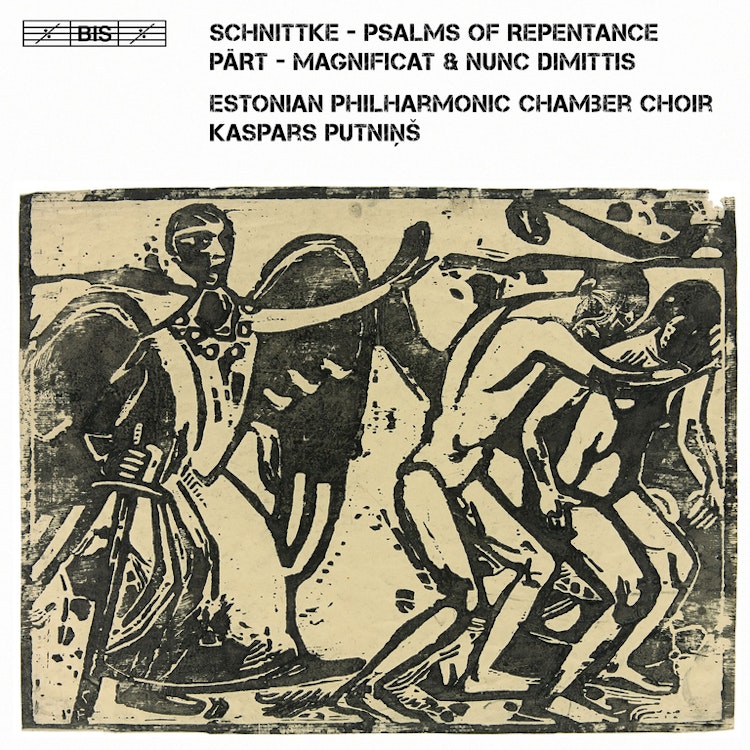
Winner of the Gramophone Classical Music Award 2018 (Choral). Alfred Schnittke and Arvo Pärt lived through times of remarkable change in the last decades of the Soviet Union. From the 1970s, state restrictions on religion were gradually relaxed and this was reflected in the arts and especially in music. Schnittke’s adoption of Christianity was triggered by the death of his mother in 1972, and culminated in his later conversion to Catholicism. Pärt was from a nominally Lutheran background in Estonia, but embraced the Orthodox faith in the 1970s, following intensive study of liturgical music. Both composers began to incorporate religious themes into their work, moving away from the modernist abstraction that had characterized their early careers.
Schnittke’s large-scale ‘Psalms of Repentance’ were composed in 1988 for the celebrations for the millennium of Christianity in Russia. The texts come from an anonymous collection of poems for Lent, written in the 16th century, and in his settings Schnittke engages with the traditions of chant-based Orthodox liturgical music. The Estonian Philharmonic Chamber Choir and Kaspars Putniņš have chosen to combine Schnittke’s Psalms with two shorter works by Arvo Pärt, whose music they are well-known exponents of. Like the ‘Psalms’, Pärt’s pieces are composed in a quasi-liturgical style, and with its serene atmosphere, his ‘Nunc dimittis’ forms a natural counterpart to the ‘Magnificat’ even though the two were written more than a decade apart.
Featuring
Kaspars Putniņš
Raul Mikson
Maria Melaha
Karolina Kriis
Marianne Pärna
Ave Hännikäinen
Toomas Tohert
Kaia Urb
Estonian Philharmonic Chamber Choir
Alfred Schnittke
Arvo Pärt
Did you know?
1/7
Composer Biography
Arvo Pärt, though from a Lutheran background, enthusiastically embraced the Orthodox faith in the 1970s after extensive study of liturgical music.
Composer Biography
Alfred Schnittke's adoption of Christianity was prompted by his mother's death in 1972 and culminated in his baptism in Vienna a decade later.
Composition History
Alfred Schnittke's Psalms of Repentance were premiered in 1988 as part of officially endorsed state-wide celebrations for the millennium of Christianity in Russia.
Compositional Technique
Schnittke's Psalms of Repentance reflect the Byzantine tradition of unaccompanied choral singing and engage with chant-based Orthodox liturgical music.
Compositional Technique
Arvo Pärt's Magnificat employs his 'tintinnabuli' technique, where triadic accompaniments imitate bell harmonic frequencies, creating an enveloping choral texture.
Performer Biography
The Estonian Philharmonic Chamber Choir, founded in 1981, has a repertoire ranging from Gregorian chant to 21st-century music, with a special focus on Estonian composers.
Composer's Artistic Vision
Both Alfred Schnittke and Arvo Pärt began incorporating religious themes into their work, moving away from the modernist abstraction of their early careers.
You might also enjoy...
Rachmaninoff: All-Night Vigil, Op. 37
Rachmaninov Vespers
Nunc dimittis
Lauridsen: Lux Aeterna
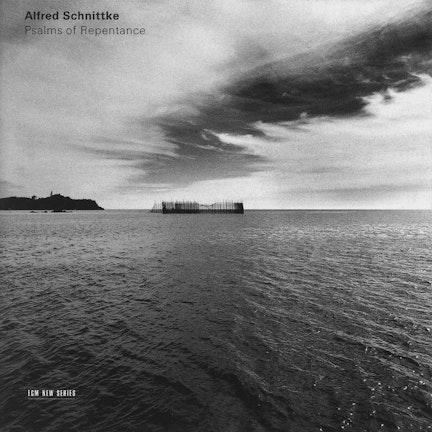
Schnittke: Psalms Of Repentance
Pyotr Ilyich Tchaikovsky: Works for Choruses
Rachmaninov - Vespers
Till ängeln med de brinnande händerna (To the Angel with the fiery hands)