Gregorio Allegri's Miserere, written between 1629 and 1652, became famous across Europe, partly because the Vatican prevented its score from being widely distributed.
Compositional Technique
The album features 'contrafacta,' a common 17th-century practice where secular texts were replaced with sacred ones, or vice versa, while preserving the original music.
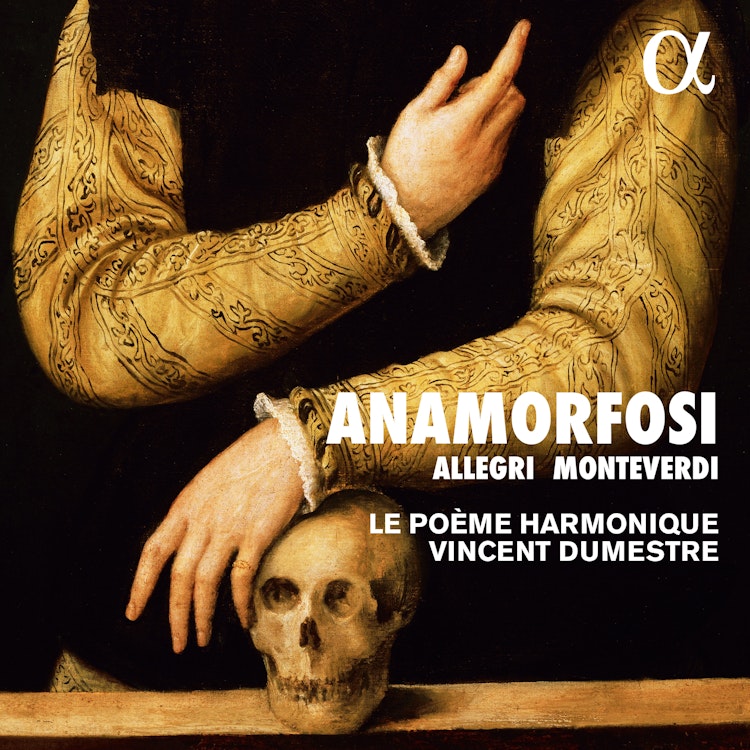
Album & Artwork
The album's concept, 'Anamorfosi,' is inspired by 17th-century artistic principles where a subject reveals itself only when viewed from a specific, oblique perspective.
Interpretation
The performers on this album engage with the complex and codified practice of 17th-century ornamentation and improvisation, which is often not explicitly notated in the original scores.
Historical Context
The first written sources of the ornamentation for Allegri's Miserere only date back to the 18th century, with an edition by Charles Burney that supposedly copied a transcription made by W.A. Mozart during his visit to Rome.
Recording & Production
This album was recorded in June 2018 at Baume-les-Messieurs, a historic site in the Jura region of France, and is the first recording project from its cultural initiative.
You might also enjoy...
Bertali: Missa Resurrectionis
Handel goes Wild
Bruun: The Green Groves
Strauss Ii: Waltz Arrangements by Arnold Schoenberg, Anton Webern and Alban Berg
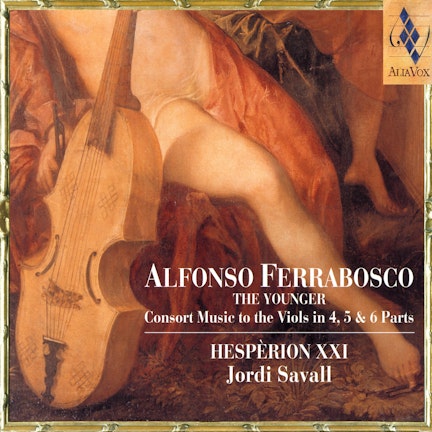
Alfonso Ferrabosco: Consort Music To The Viols In 4, 5 & 6 Parts