Allegri: Miserere - Palestrina: Missa Papae Marcelli
5/22/2005, 9 Tracks, 56:26
Featuring
Harry Christophers
Christopher Purves
Christopher Royall
Ruth Dean
Sally Dunkley
The Sixteen
Antonio Lotti
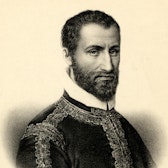
Giovanni Pierluigi da Palestrina
Gregorio Allegri
Did you know?
1/7
Composition History
Palestrina's Stabat Mater was likely written for Pope Gregory XIV (who reigned from 1590 to 1592) during the composer's last years.
Cultural Impact
Allegri's Miserere was so highly regarded by the papacy that they refused to allow copies to leave the Sistine Chapel, leading to a story that Mozart copied it from memory.
Composer Biography
Gregorio Allegri, composer of the famous Miserere, was a tenor in the choir at the Sistine Chapel.
Compositional Technique
Palestrina's Mass Papae Marcelli is an intricate tapestry for voices where the words are always clear, written to prove that complex music could still convey the message of the scriptures.
Interpretation
The version of Allegri's Miserere on this recording is based on a sketch of the ornamentation made by Mendelssohn, reflecting how the piece has taken on its own life beyond its creator's original intent.
Historical Context
Antonio Lotti, a versatile musician born around 1667, spent most of his life in Venice and was admired for his 'progressive' tendencies towards the Classical style.
Compositional Technique
Lotti's sacred music, while rooted in early 18th-century harmony, strongly relates to 16th-century counterpoint, featuring chromatic and melodically angular passages that moved historian Charles Burney to tears.
You might also enjoy...
Palestrina, G.P.: Missa O Sacrum Convivium
Times Go by Turns
Renaissance - Music for Inner Peace
Choral Recital: Osnabruck Youth Choir - Weelkes, T. / Tallis, T. / Lassus, O. / Ludovico Da Vittoria / Gesualdo, C. / Lotti, A. / Palestrina, G.P.
Crucifixus. Chormusik zur Kar- und Osterliturgie
Exultate Deo: Masterpieces of Sacred Polyphony
The Flowering of Renaissance Choral Music
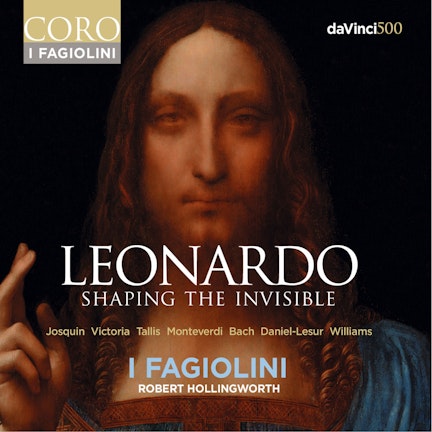
Leonardo: Shaping the Invisible
Choral Music - Hildegard of Bingen / Palestrina, G. / Byrd, W. / Isaac, H. / Josquin Des Prez / Dufay, G.