All pieces on this album are performed without a conductor, adhering to traditional tango performance practice.
Instruments
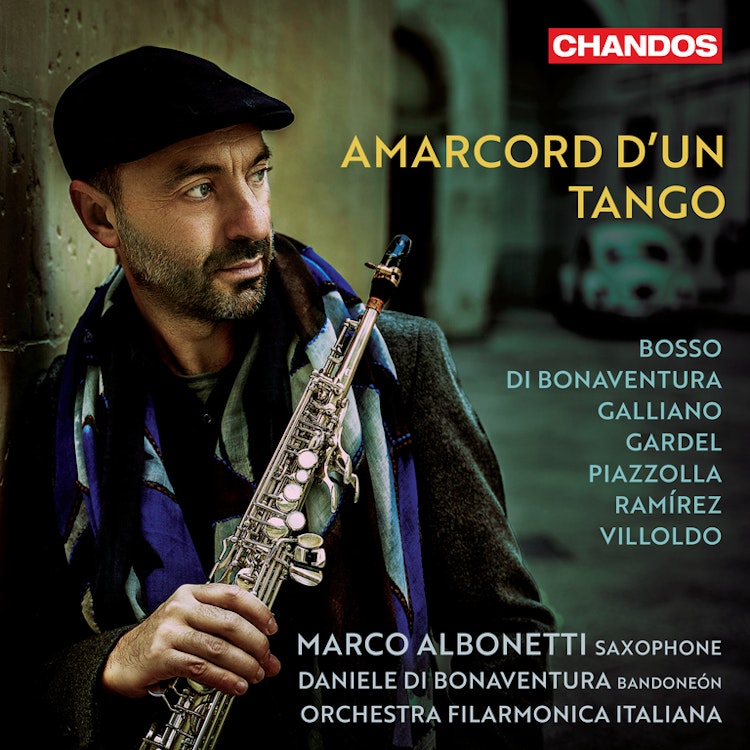
Daniele di Bonaventura performs on a 1928 'Premiere' bandoneón, an Argentine model with 142 tones, and uses synthetic reeds to achieve a unique 'dirty' and nostalgic sound.
Historical Context
The saxophone, invented in Belgium, found its "promised land" in America, where it became inextricably linked to jazz, much like the bandoneón with tango.
Historical Context
The bandoneón, originally created in Germany as a substitute for the organ in sacred music, became central to tango in Buenos Aires after German immigrants brought it there.
Composer's Artistic Vision
This recording project intentionally blends sacred and profane music, reflecting the diverse origins and evolution of the featured instruments and the tango itself.
Album & Artwork
The album title, "Amarcord d'un Tango," signifies memory and the nostalgic re-enactment of the past, uniting the saxophone and bandoneón.
Interpretation
The orchestration for this album aims to evoke the sound of the 'Golden Age' tango orchestras of the 1950s, using a chamber orchestra of eight violins, two violas, two cellos, and a double-bass.
You might also enjoy...
Journey to Serenity: New Works for Piano & Orchestra
She Composed: The Holidays
Postcards from Italy - Italian Music for Film
Orchestral Works
In The Waiting Room: Four Works for String Orchestra