Stokowski encouraged individual string players to move their bows independently, creating a more equalized, livelier, and richer sound than communal bowing.
Interpretation
Stokowski re-arranged orchestral seating, placing cellos and contrabasses at the back as the orchestra's foundation, a 'German formation' still used by the Vienna Philharmonic Orchestra.
Recording & Production
As a pioneer in stereo recordings, Stokowski expanded the double bass section in his recording of Tchaikovsky's Slavonic March to better utilize the lower frequencies of electronic recording.
Composer's Artistic Vision
Stokowski's orchestral transcriptions of Bach's music, though criticized by some, aimed to make Bach's repertoire more accessible to a wider audience at a time when it was largely associated with church music.
Performer Biography
Stokowski abandoned the traditional use of a baton, conducting instead with majestic arm movements and often highlighting his hands with floodlights, earning him the nickname 'Charlatan of Orchestral Playing'.
Compositional Technique
Stokowski introduced the 'Philadelphia sound' or 'Stokowski sound' with the Philadelphia Orchestra, characterized by a sultry, full-bodied, virtuoso orchestral sound emulating an organ timbre.
Performer Biography
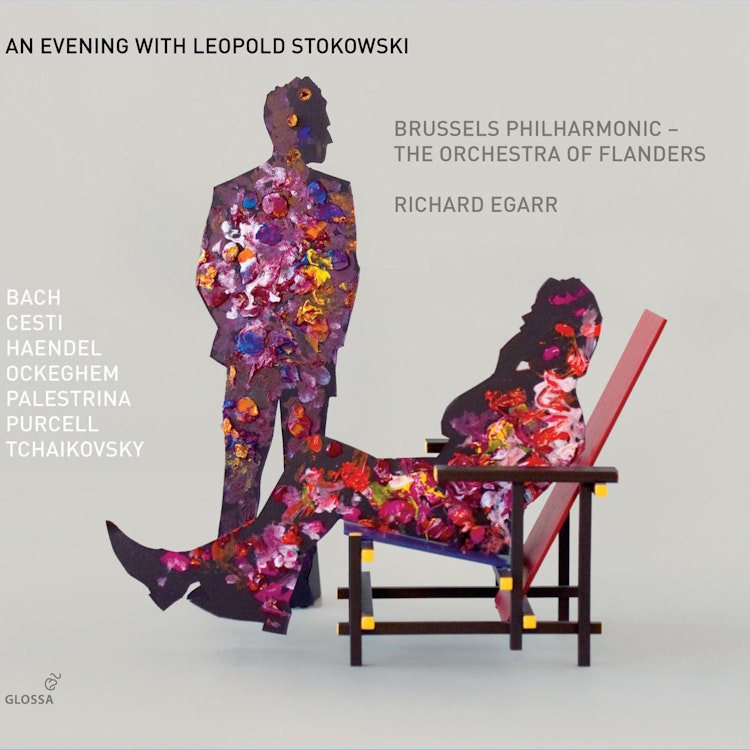
Leopold Stokowski, a British conductor, gained fame in America as a conductor, orchestral trainer, and pioneer in stereo recording.
You might also enjoy...
Moeran: Cello Concerto - Serenade
Ibert / Tomasi / Ravel / Maurice / Schmitt / Milhaud: Works for Saxophone and Orchestra
Music from 6 Continents (1998 Series)
Cinema per archi
Bottesini Collection (The), Vol. 2
Spoliansky, M.: Film Music
Schoenberg: Complete Works for Chamber Ensemble
Leifs: Lay of Helgi the Hunding-Slayer (The) / Groa's Spell / Landfall / Iceland Cantata