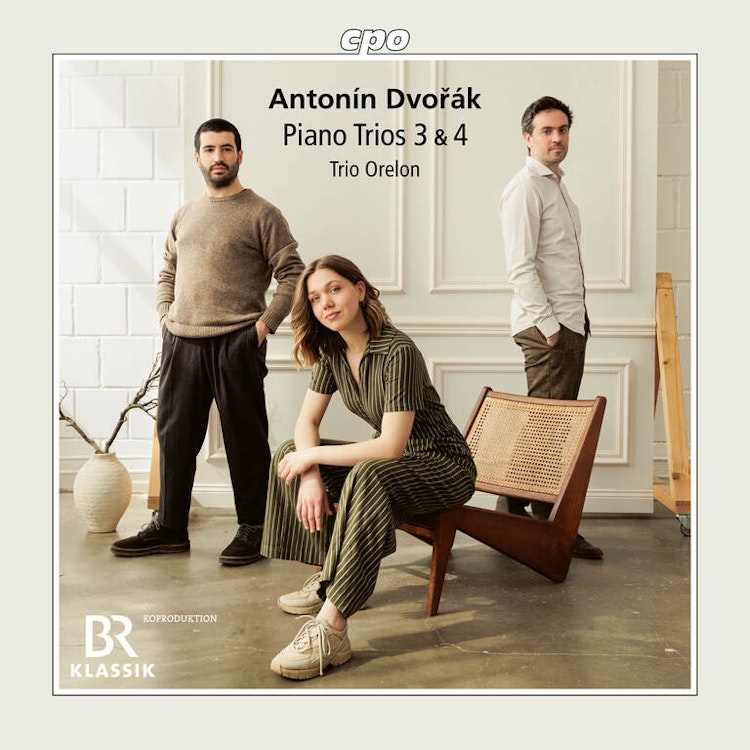
Dvořák described his 'Dumky' Trio as having a lighter, more popular style, suitable for both refined and less discerning listeners, with sections like a serious song and a cheerful dance.
Composition History
Johannes Brahms, initially Dvořák's patron, became an artistic friend who encouraged Dvořák to establish himself as a composer of equal stature.
Compositional Technique
The 'Dumky' Trio is inspired by the elegiac 'folk ballad' known as the 'dumka,' which alternates between slow, melancholic 'Dumka' sections and lively, dance-like 'Sumka' parts.
Composition History
Dvořák undertook extensive revisions of his F minor Trio, Op. 65, after initial rehearsals, changing so much that it is considered almost a completely new version.
Composer Biography
The somber tone of Dvořák's F minor Trio is often attributed to the emotional shock caused by his mother's death on December 15, 1882.
Composition History
Dvořák's Piano Trio in F minor, Op. 65, composed in 1883, holds an extraordinary place in his work, similar to his Symphony No. 7 in D minor.
Notable Performances
At the premiere of the 'Dumky' Trio, Dvořák himself played the piano, and the performance was so enthusiastically received that two of the 'Dumky' had to be repeated.
You might also enjoy...
Malawski, Krzysztof: Polish Piano Trios
Fauré: Piano Quartets
Dvořák - Complete Piano Trios
Smetana: Piano Trio - Dvorak: Dumky
Gouvy: Piano Trios Nos. 2 & 3
Smetana: Piano Trio in G Minor/Dvorak: Piano Trio No. 4, "Dumky"
Smetana, B.: Piano Trio, Op. 15 / Shostakovich, D.: Piano Trio No. 2
Rachmaninov: Trio élégiaque No. 2 - Glinka: Trio pathétique in D Minor
History of the Russian Piano Trio, Vol. 9
Marschner: Piano Trios, Vol. 1
Pfitzner: Piano Trio in F Major, Op. 8 & Piano Trio in B-Flat Major