Bach wrote these works at a time when the cello was beginning to gain prominence, and he himself experimented with a violoncello piccolo in some cantatas, bridging the era of the viola da gamba and the cello.
Recording & Production
The recording session for Bach's Sonatas for Viola da Gamba and Harpsichord was challenged by a thunderstorm, which caused the harpsichord to go out of tune.
Performer Biography
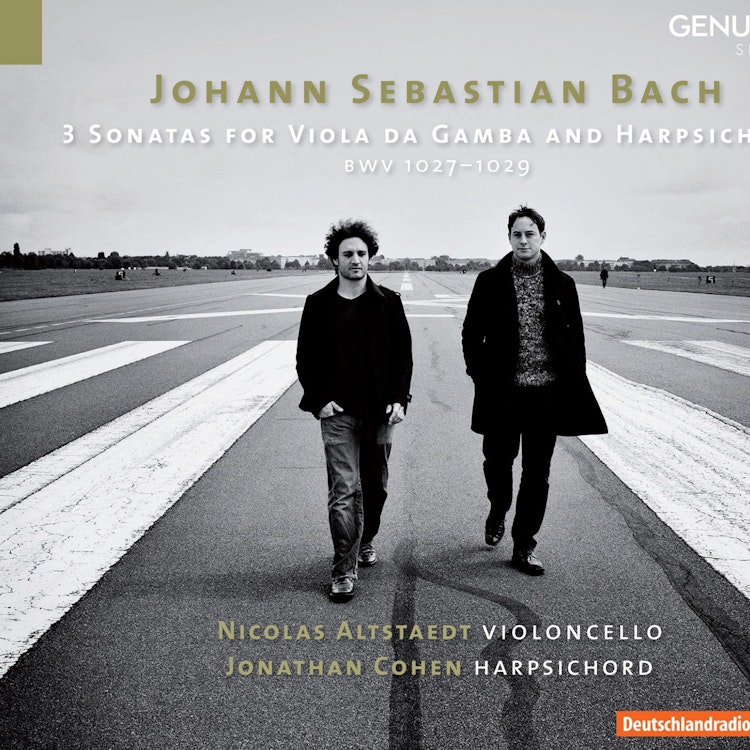
Nicolas Altstaedt, the cellist on this recording, was one of the last pupils of Boris Pergamenschikov at the Hochschule für Musik Hanns Eisler Berlin and has won numerous international music competitions.
Interpretation
Cellist Nicolas Altstaedt and harpsichordist Jonathan Cohen chose to perform these sonatas with a cello and harpsichord, tuning the cello's steel strings a half-tone lower to match the 415 Hz concert pitch common in Cöthen around 1720.
Composer's Artistic Vision
Bach liked the soft, warm, intimate sound of the viola da gamba, using it uniquely in the St. Matthew Passion and giving it equal status in a polyphonic movement in these sonatas.
Composition History
The origins of all three sonatas remain obscure, and only the first sonata survives as an autograph manuscript by Bach, originally for two transverse flutes and basso continuo.
Composer Biography
Bach's employer in Cöthen, Prince Leopold of Anhalt-Cöthen, played the viola da gamba, as did Bach's colleague Christian Ferdinand Abel, suggesting Bach may have written the sonatas for them.
You might also enjoy...
Bach: Offrande Musicale
Bach: Drei Sonaten für Viola da Gamba und Cembalo
Leclair: Sonates à violon seul avec la basse continue (Extraites du Quatrième livre)
Bach: Musical Offering
The Division Violin
Bach: Musical Offering, BWV 1079
Leclair: Violin Sonatas, Op. 5 Nos. 9-12
Marais: La Gamme
Bach: A Musical Offering, BWV 1079
Bach: The Musical Offering
Bach: Viola da gamba Sonata BWV 1027-1029
J.S. Bach Sonatas for Viola (da Gamba) and Harpsichord BWV 1027-1029