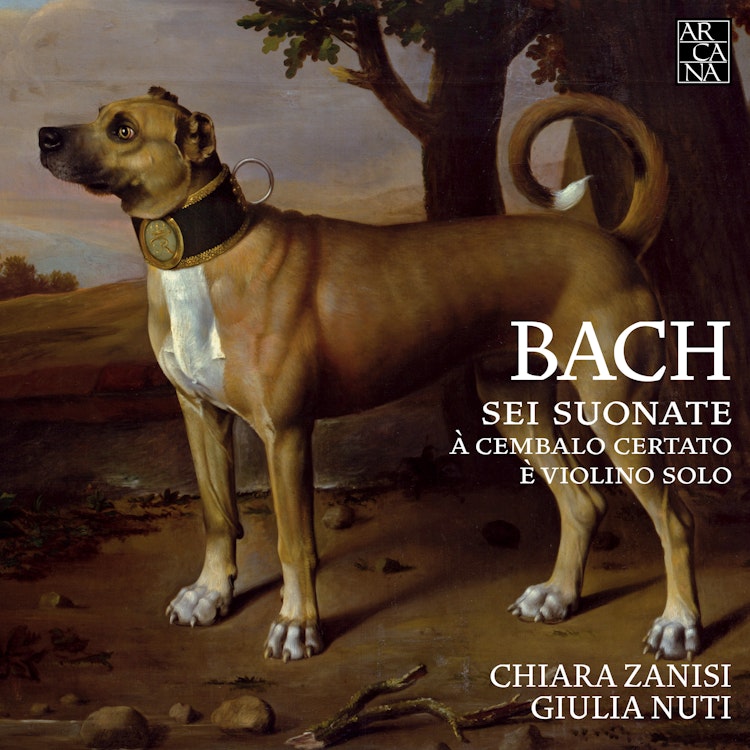
The autograph manuscript for Bach's Six Sonatas for violin and harpsichord has been lost, and the works are known through three manuscript copies, with one by Johann Christoph Altnickol (Bach's pupil and son-in-law) considered authoritative.
Interpretation
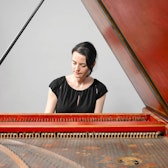
The performers, Chiara Zanisi and Giulia Nuti, aimed for an interpretation that was personal and unique, avoiding contamination from other historical recordings and focusing on the music's inherent meaning.
Composer Biography
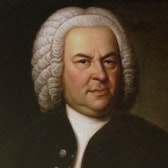
J.S. Bach's father, Johann Ambrosius, was a violinist and violist who gave his son his basic musical education and made him a good string player at a very early age.
Compositional Technique
These sonatas combine German and Italian styles, featuring dense, contrapuntal writing typical of the Germanic tradition alongside the vivacity and cantabile qualities of Italian music.
Compositional Technique
Bach's sonatas for violin and harpsichord are notable for giving equal importance to both instruments, a departure from the common practice of the time where the harpsichord often served as mere accompaniment.
Composer Biography
Bach began his professional career as a lackey and violinist in the court orchestra of Duke Johann Ernst in Weimar.
Instruments
Chiara Zanisi, the violinist on this recording, plays a Giuseppe Gagliano violin from 1761, which previously served as a lead instrument in the La Scala di Milano orchestra.
You might also enjoy...
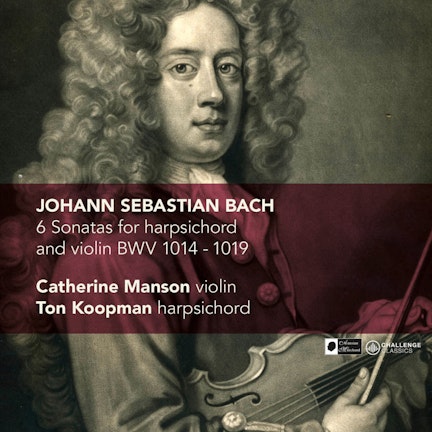
J.S. Bach: 6 Sonatas for harpsichord and violin BWV 1014-1019
J.S. Bach: Sonatas for Violin and Harpsichord
Bach: 6 Sonatas for Violin & Harpsichord
Bach, J.S.: Sonatas for Violin and Harpsichord BWV 1014-1019
Bach, J.S.: Sonatas Nos. 1-6 for Violin and Harpsichord
J.S. Bach: Violin Sonatas, BWV 1014-1019
J.S. Bach: Sei suonate a Cembalo certato e Violino solo
Bach, JS : Violin Sonatas Nos 1 - 6 [Complete]
J.S. Bach: Sonatas for Violin & Harpsichord
Bach: Sonatas for Violin and Harpsicord
Bach, J.S.: 6 Sonate per Violino e Cembalo BWV 1014 - 1019