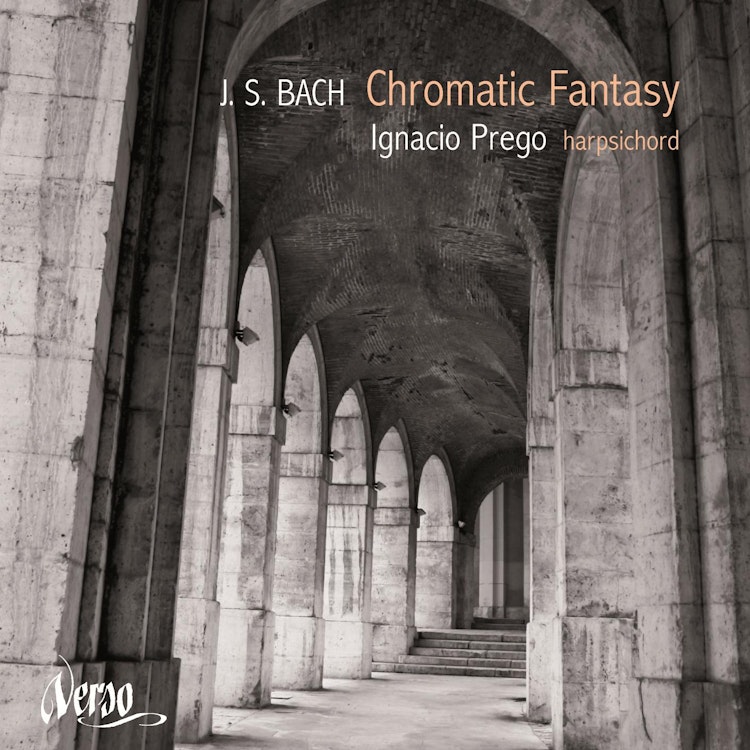
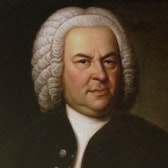
The conceptual plan for the Chromatic Fantasy and Fugue BWV 903 was to present a virtuosic piece of the highest level to professional musicians, including Bach himself.
Composition History
The Chromatic Fantasy and Fugue in D minor BWV 903 was likely composed in two phases, first around 1720 in Cöthen and then revised in 1730 in Leipzig.
Compositional Technique
The Chromatic Fantasy and Fugue BWV 903 is designed as a contrasting diptych, resolving through the dialectical confrontation between the freedom of the Fantasy and the structural inflexibility of the Fugue.
Composition History
Bach dedicated the Capriccio sopra la lontananza del fratello diletissimo BWV 992 to his older brother Johann Jacob, who was leaving to join the band of King Charles XII of Sweden.
Composition History
Bach's Clavierübung, containing the Partitas BWV 825-830, was published during his lifetime in 1731 as his Opus I, with individual partitas released between 1726 and 1730.
Composition History
Bach likely titled these works 'Partita' to honor Johann Kuhnau, his predecessor at St. Thomas Church, who had successfully published collections of 'partitas' in 1689 and 1692.
Composer's Artistic Vision
A substantial part of Bach's work focuses on harpsichord music, where he innovated the suite form while combining architectural elements like counterpoint with imaginative traits.
You might also enjoy...
L'aimable. Une journée avec Louis XV
J.S. Bach: Suites & Partitas
Stylus Luxurians
Bach, J.S.: Harpsichord Works - Suites, Bwv 818A, 823 / 4 Duets / Fantasia On A Rondo / Preludes / Sonata
J.S. Bach: Miscellaneous Pieces for Harpsichord
Thomas Roseingrave: Harpsichord Suites
Concerto: Works for One & Two Harpsichords
Hamburg 1734
Johann Sebastian Bach: Italian Concerto / Chromatic Fantasia and Fugue, BWV 903 / Overture (Partita) in the French Style, BWV 831 [Pischner]
Harpsichord Recital
J.S. Bach: Complete Edition, Vol. 3/10
Harpsichord Music from the Reign of Louis XIV
Fantasy & Caprice
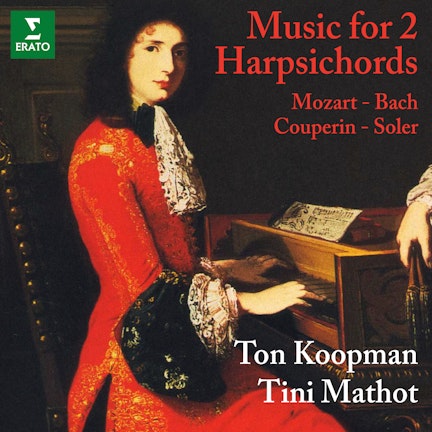
Mozart, WF Bach, Couperin & Soler: Music for 2 Harpsichords