Like his father, Johann Sebastian Bach, C.P.E. Bach was an "inveterate reviser" who made changes to his pieces every time he revisited them, making the concept of a "definitive" version foreign to his work.
Instruments
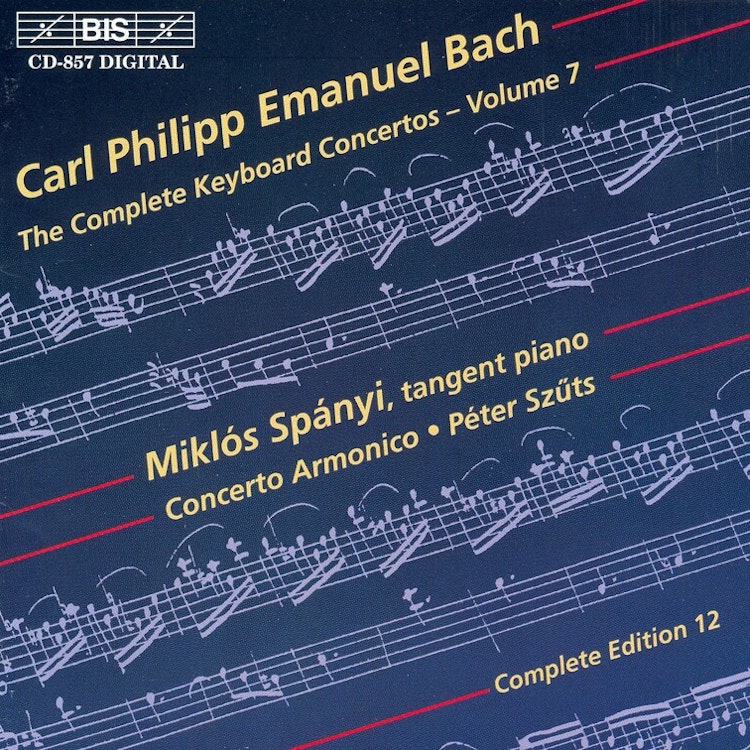
The tangent piano, used on this recording, was an early fortepiano that aimed to combine the harpsichord's bright sound with the ability to produce dynamic nuances through touch.
Performer Biography
Miklós Spányi, the tangent piano soloist, has won first prize at international harpsichord competitions in Nantes (1984) and Paris (1987) and teaches at the Oulu Conservatory in Finland.
Instruments
The playing technique of the tangent piano requires a very light but extremely controlled touch; attempting to play with force results in an unpleasant clatter.
Recording & Production
This recording is almost exclusively based on manuscripts from the Koninklijk Conservatorium/Conservatoire Royal in Brussels, which originally belonged to Johann Jakob Heinrich Westphal, an ardent collector of C.P.E. Bach's music.
Composer Biography
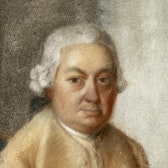
Carl Philipp Emanuel Bach, recognized as one of the most original musicians of the 18th century, spent the first 30 years of his career as a court musician for Frederick the Great of Prussia.
Composition History
C.P.E. Bach's desire to make his music widely available led him to arrange many of his concertos for different solo instruments, including keyboard, flute, and cello.
You might also enjoy...
Bach: Complete Keyboard Concertos, Vol. 14
C.P.E. Bach: Double Concertos
Bach, J.S.: Concertos for Harpsichord and Strings
J.S. Bach: Harpsichord Concertos
J. S. Bach: Harpsichord Concertos vol. 1
J.S. Bach: Concertos for Harpsichord & Strings, Vol. 2
J. S. Bach: Harpsichord Concertos
Bach: The Harpsichord Concertos
J. S. Bach: Concerto No. 1 in D minor, BWV 1052 & C.P.E. Bach: Concerto in D minor, Wq. 23