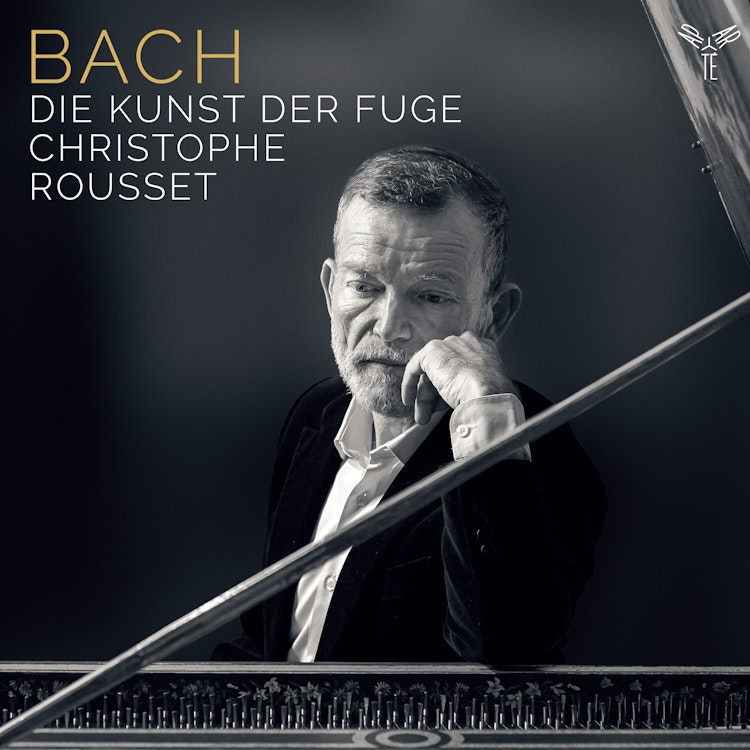
Christophe Rousset, like Gustav Leonhardt and Bob van Asperen, chooses to omit the fragmentary Fuga a tre soggetti from his performance of The Art of Fugue, believing Bach would not have played an incomplete fugue.
Composition History
The Art of Fugue was not a late-life work as previously thought; Bach began working on it in the late 1730s, and a first version was completed around 1742.
Critical Reception
In 1737, a music magazine article, which Bach recognized as being about himself, praised his keyboard skills but criticized his music for being artificially 'overloaded' and lacking naturalness.
Instruments
Christophe Rousset, the performer, plays an anonymous German harpsichord from around 1750, which is part of a private collection.
Recording & Production
This album was recorded by Little Tribeca from November 29 to December 2, 2020, at L'Hôtel de l'Industrie in Paris.
Composer's Artistic Vision
The Art of Fugue, along with the Goldberg Variations, The Musical Offering, and the Canonic Variations, demonstrates Bach's principle of exploring all the potentialities of a single musical material.
Composer Biography
In November 1736, Johann Sebastian Bach was appointed Royal-Polish and Electoral-Saxon Court Composer, an honorary distinction that recognized his reputation as a phenomenal harpsichordist and organist.