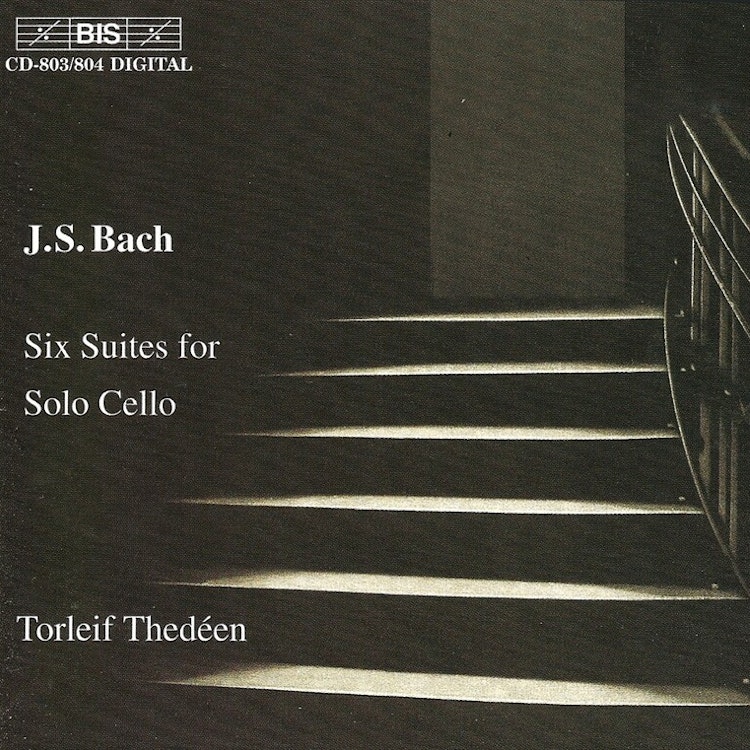
Bach, J.S.: 6 Suites for Solo Cello, Bwv 1007-1012
5/31/2001, 36 Tracks, 2:21:35
Featuring
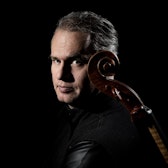
Torleif Thedéen
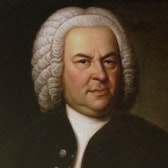
Johann Sebastian Bach
Did you know?
1/7
Instruments
Bach caused confusion by writing the Sixth Suite for a five-stringed instrument, which could have been a special cello or a viola pomposa, an instrument played on the arm and shoulder.
Critical Reception
The true compositional and historical significance of Bach's solo cello suites was first recognized by Max Reger, a composer who then created his own solo works for violin and cello.
Composer Biography
Bach was known primarily as an outstanding organist during his time at the Weimar court (1708-1717), but he also mastered the violin and viola.
Composition History
Anna Magdalena Bach, the composer's wife, made a copy of the Sonatas and Partitas for solo violin and the Six Suites for solo cello for Georg Heinrich Ludwig Schwanberg, active at the Wolfenbüttel court.
Composition History
Bach's Suites for solo cello, along with his Sonatas and Partitas for solo violin and Partita for solo flute, explored the genre of solo instrumental works, which was largely ignored at the time.
Composition History
The exact reasons and recipients for Bach's solo violin and cello works are unknown, but he made an autograph fair copy of the Sonatas and Partitas in Karlsbad in 1720.
Compositional Technique
Ernst Kurth, in his influential 1917 study, highlighted a characteristic phenomenon in Bach's compositions: 'latent polyphony,' where voices complement each other within a single melodic line.
You might also enjoy...
Bach: Suites for Violoncello Nos. 1-3, BWV 1007-1009