The transverse flute, or 'traverso,' though having intonation problems that Mozart later complained about, offered greater expressive capacity than the recorder due to its ability to produce a wide range of timbres and singing-like qualities.
Interpretation
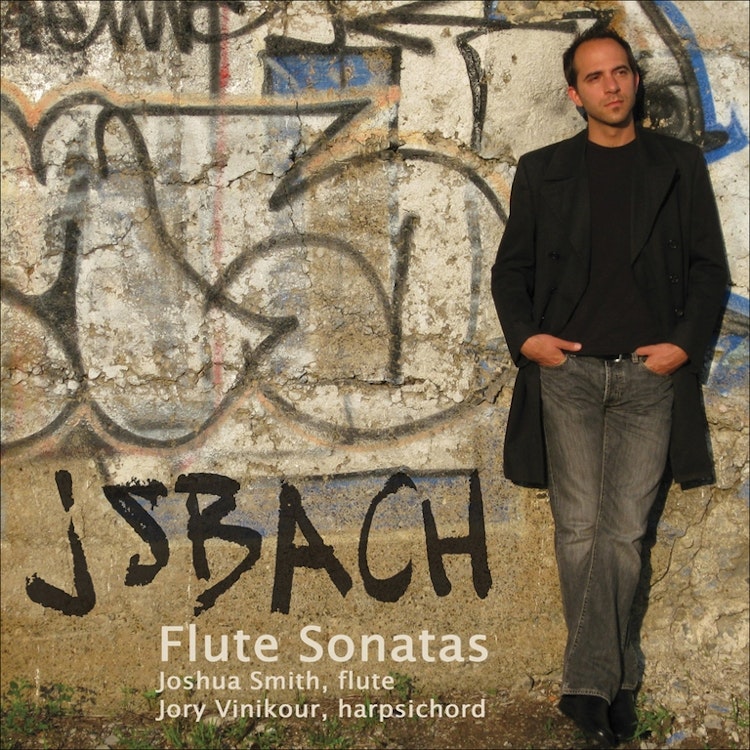
Joshua Smith, the flutist on this recording, uses a wooden Rudall-Carte flute with a reproduction Louis Lot headjoint, which he describes as a Romantic-era period flute, to explore earlier performance styles.
Composer Biography
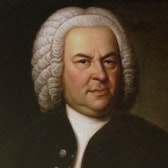
Johann Sebastian Bach, the composer, was 32 years old when he first encountered the transverse flute in 1717, an instrument that made an immediate impression on him.
Cultural Impact
Johann Sebastian Bach's demanding compositions for the one-keyed flute helped incentivize Theobald Boehm, a 19th-century flutist and goldsmith, to develop the modern flute.
Compositional Technique
Musicologist Bradley Lehman hypothesizes that a calligraphic symbol on the title page of Bach's "The Well Tempered Clavier" is a disguised formula for a unique tuning temperament, allowing each key its own tonal flavor.
Instruments
The harpsichord used in this recording was built by Reinhard von Nagel in the workshop of William Dowd Harpsichords, a pioneer in the classical harpsichord revival.
Compositional Technique
The concept of using the harpsichord as a duo partner with a fully realized part, rather than just a continuo instrument, appears to be Johann Sebastian Bach's own invention.