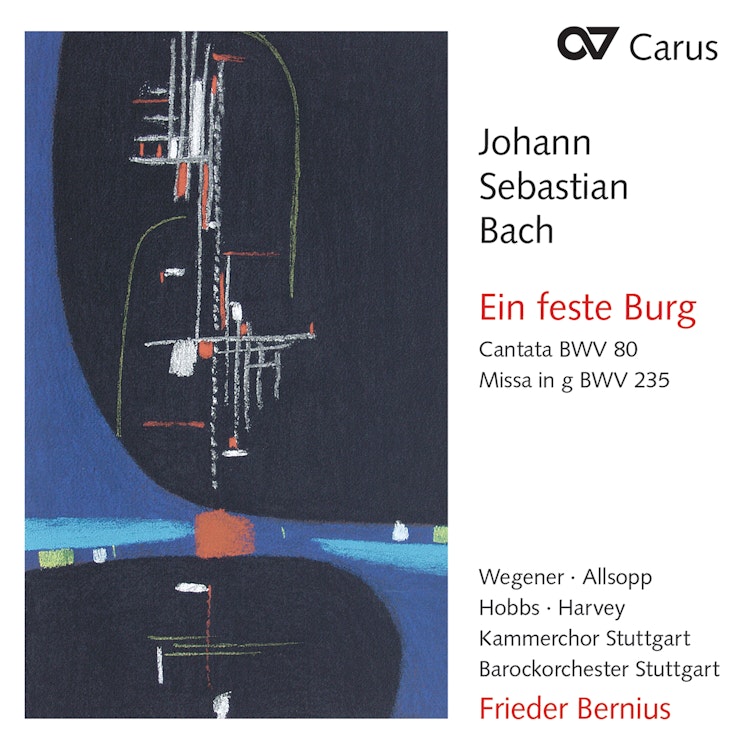
Bach, J.S.: Mass in G Minor, BWV 235; Eine feste Burg ist unser Gott, BWV 80
9/11/2017, 14 Tracks, 48:49
Featuring
Frieder Bernius
David Allsopp
Thomas Hobbs
Peter Harvey
Sarah Wegener
Barockorchester Stuttgart
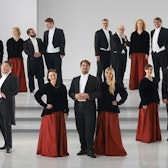
Kammerchor Stuttgart
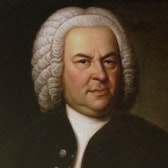
Johann Sebastian Bach
Did you know?
1/7
Performer Biography
Frieder Bernius, the conductor, was awarded the Bach Medal by the city of Leipzig in 2009 in recognition of his decades-long dedication to Johann Sebastian Bach's music.
Composition History
Bach's Cantata BWV 80, 'Ein feste Burg ist unser Gott', has a complex, multi-layered compositional history, evolving from an earlier cantata from 1716, with significant additions made in Leipzig.
Historical Context
The hymn 'Ein feste Burg ist unser Gott' (A Mighty Fortress Is Our God) by Martin Luther became a confessional hymn for the Protestant movement shortly after its creation around 1527.
Composition History
Bach's four Lutheran Masses, including the Missa in g BWV 235, are almost entirely 'parodies' of earlier cantata movements, meaning he reused and adapted existing music.
Compositional Technique
In the Missa in g BWV 235, Bach adapted existing cantata movements by changing the text and making significant musical alterations, such as shortening sections or composing new material to fit the new liturgical context.
Compositional Technique
The monumental opening chorus of Bach's Cantata BWV 80 features a four-part choral motet with individual hymn lines treated fugally, all 'overarched' by an orchestral canon on the same hymn melody.
Historical Context
The version of Cantata BWV 80 commonly heard today, with trumpets and timpani, was not written by J.S. Bach but was an arrangement by his son, Wilhelm Friedemann Bach, due to political reasons in Saxony.
You might also enjoy...
J.S. Bach: Ein feste Burg
Choral Music (Sacred) - Zelenka, J.D. / Hasse, J.A. / Heinichen, J.D. / Homilius, G.A.
Carl Philipp Emanuel Bach: Magnificat. Die Himmel erzählen die Ehre Gottes