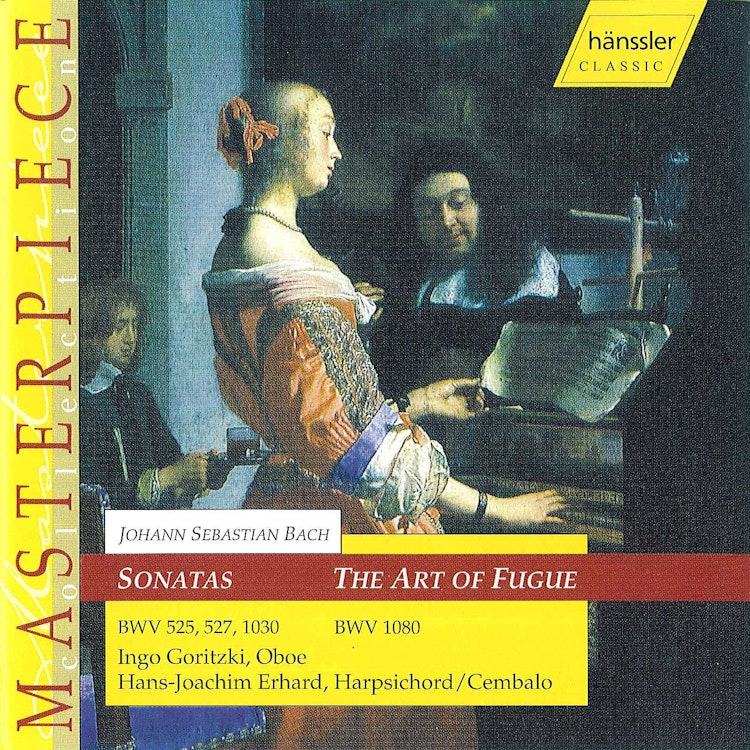
Bach, J.S.: Sonata in F Major, Bwv 525, Sonata in D Minor, Bwv 527, Sonata in G Minor, Bwv 1030
1/1/2000, 13 Tracks, 59:43
Featuring
Ingo Goritzki
Hans-Joachim Erhard
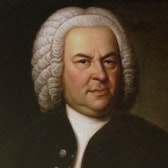
Johann Sebastian Bach
Did you know?
1/7
Performer Biography
Hans-Joachim Erhard, the harpsichordist on this recording, was a teacher at the Frankfurt School of Music and a member of the faculty at the J.S. Bach Summer Academy and the Bach Academy in Krakow, Tokyo, and Sendai.
Composer's Artistic Vision
J.S. Bach composed the Organ Trio Sonatas for his 13-year-old son, Wilhelm Friedemann, as a preparatory work for him to become a great organist, yet they are also considered a masterpiece.
Performer Biography
Ingo Goritzki, the oboist on this recording, was a principal oboist in the Basel Symphony Orchestra and for Radio Frankfurt before becoming a professor at the State College of Music and Theatre in Hannover and later in Stuttgart.
Composition History
J.S. Bach's Organ Trio Sonatas, though appearing as a unified work, were compiled from existing pieces, with only 7 out of 18 movements newly composed for the collection.
Interpretation
The idea to arrange and play these pieces for oboe and obligato harpsichord came from oboist Ingo Goritzki's teacher, Helmut Winschermann, who suggested the first Organ Trio Sonata contained an oboe sonata.
Cultural Impact
The movements from J.S. Bach's Organ Trio Sonatas were later used by other composers, including Bach himself in his Triple Concerto, and W.A. Mozart in his 'Adagios and Fugues' K.V. 404.
Recording & Production
The recording of the six sonatas for Radio Bremen was interrupted by the illness and death of harpsichordist Hans-Joachim Erhard in summer 1990, after the first and third sonatas had been recorded.
You might also enjoy...
J.S. Bach: Orchestral Suite No. 2 in B Minor, BWV 1067: No. 7, Badinerie (Arr. Spindler for Oboe, Strings and Basso continuo)
Vivaldi: Concerti per oboe, 2 oboi, archi e continuo
Bach, J.S.: Restored Oboe Concertos
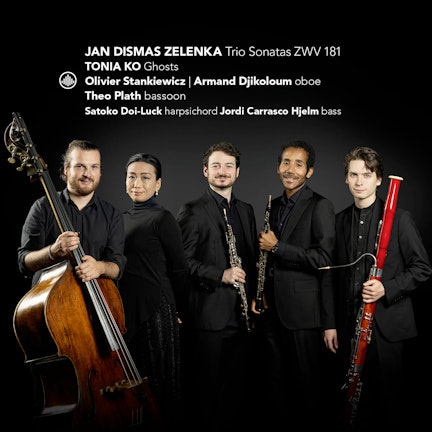
Zelenka: Trio Sonatas Zwv 181 & Ghosts
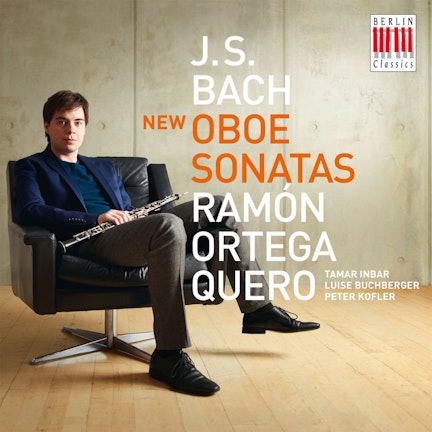
Bach: Oboensonaten
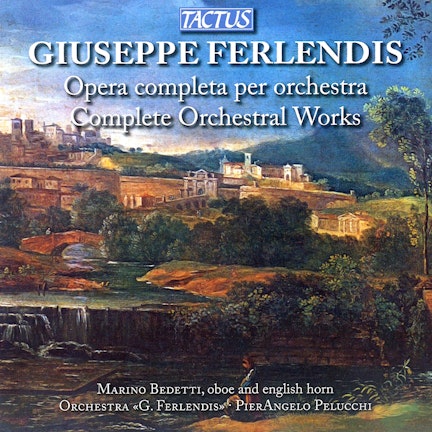
Ferlendis: Complete Orchestral Works
BACH
J.S. Bach: Oboe Concertos
Oboe Concertos
Sammartini: Concertos in A Major / D Major / B-Flat Major / C Major for Various Instruments