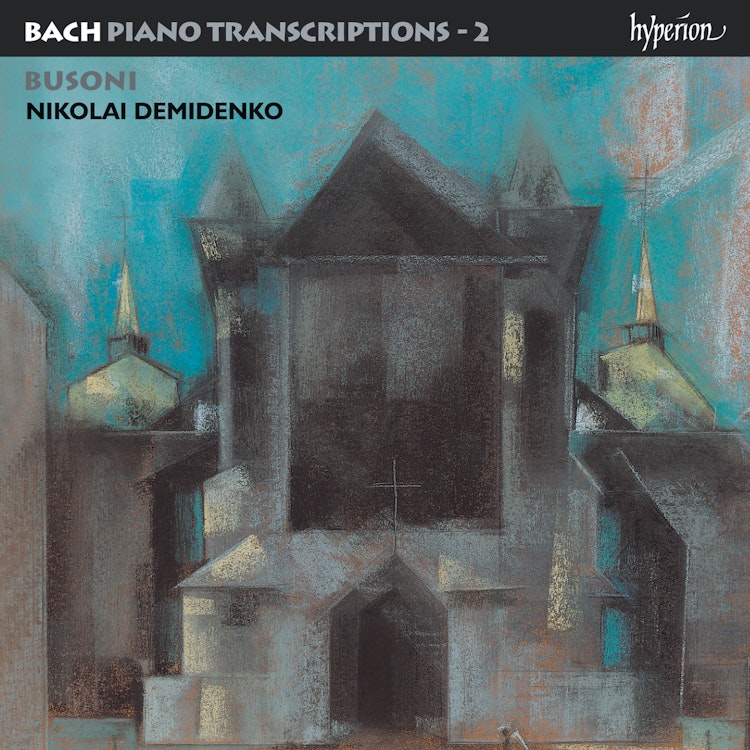
The impetus for Busoni's transcriptions came from an organ recital he attended in 1888 at the Thomaskirche in Leipzig, where Bach himself had been Kantor.
Composer Biography
Busoni's father, a clarinet virtuoso with limited musical education, insisted on his son's thorough study of Bach, which Busoni considered a 'mysterious, visionary enlightenment'.
Composer's Artistic Vision
Busoni believed that every musical notation is a transcription of an abstract idea, and the act of writing it down already alters its original form.
Recording & Production
This recording was made using a Fazioli piano, chosen for its ability to sustain notes, which is essential for transcribing organ music.
Performer Biography
Nikolai Demidenko, the pianist on this album, considers Ferruccio Busoni his favorite pianist of all time, despite the limitations of early recording technology.
Interpretation
Busoni's approach to transcribing Bach's organ works for piano involved creating an 'impression of an organ' rather than a direct imitation, using the piano's unique capabilities.
Historical Context
Before the 18th and 19th centuries, the practical realization of 'sound art' was often left to the discretion of performers and available resources, allowing for flexibility in instrumentation.