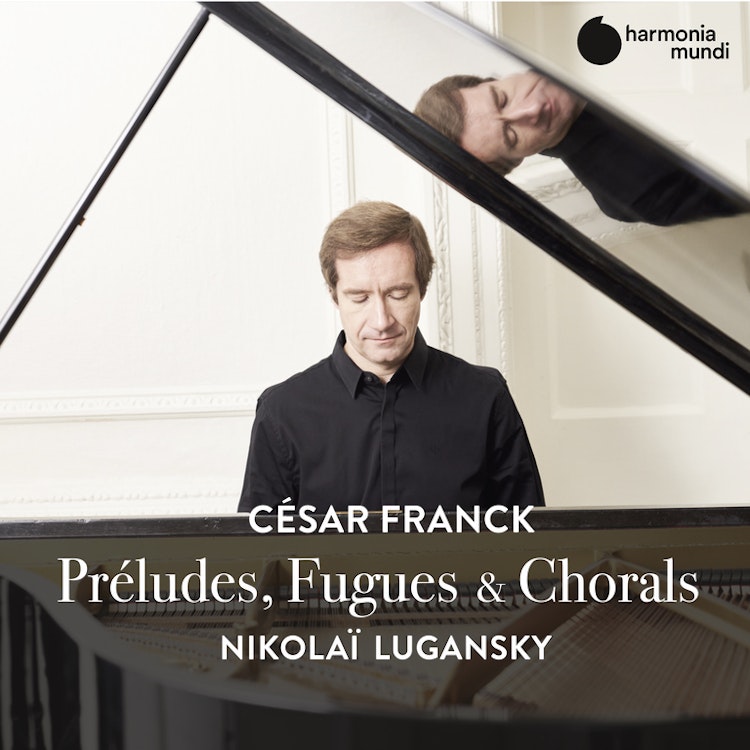
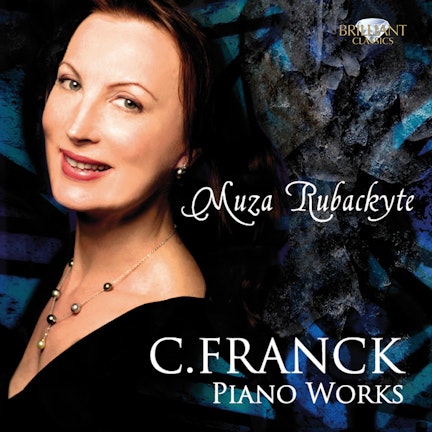
Nikolai Lugansky turns the spotlight onto César Franck’s underappreciated piano music. In the 1880s, the Belgian composer wrote two substantial solo piano works – the Prélude, Choral et Fugue and the Prélude, Aria et Final – that showed his love of organ music, and that of J.S. Bach in particular. Lugansky also plays two transcriptions of organ works: the Prélude, Fugue et Variation Op. 18, and the Choral No. 2 – arranged by Lugansky himself.
Featuring
Nikolai Lugansky
César Franck
Did you know?
1/7
Composer Biography
César Franck, the composer, had not written any music for solo piano since the 1840s, apart from a few miniatures, until he composed Prélude, choral et fugue in 1884.
Composer Biography
César Franck's death on November 8, 1890, was due to complications from pleurisy, shortly after he completed his third Choral pour grand orgue.
Composition History
The Prélude, fugue et variation, op. 18, was later transformed into an organ piece, published in 1868, and dedicated to Camille Saint-Saëns, a famous French composer and organist.
Compositional Technique
The Prélude, choral et fugue is described as a 'wholly original work' where every element serves the beauty and solidity of its construction, with nothing left to chance or improvisation.
Composer's Artistic Vision
Franck's original intention for Prélude, choral et fugue was to compose a prelude and fugue in the style of Bach, but he decided to link them with a chorale whose melodic spirit would infuse the entire composition.
Composition History
The Prélude, fugue et variation, op. 18, was originally conceived as a piano and harmonium duet for Franck's students, Louise and Geneviève Deslignières, before being adapted for organ.
Critical Reception
Despite its admirable passages, Franck's Prélude, aria et final did not receive as favorable a reception as his Prélude, choral et fugue.
You might also enjoy...
Nielsen, C.: Piano Music, Vol. 2
Schubert/Liszt: Der Wanderer, Wander Fantasie, Song Transcriptions
Mosonyi: 3 Piano Pieces, Op. 2 / 2 Pearls / Puszta Life
Mosonyi: 3 Piano Pieces, Op. 2 / 2 Pearls / Puszta Life