The three sonatas follow the Italian church sonata form, featuring a slow movement, followed by a fugue, another slow movement, and a concluding fast movement.
Compositional Technique
Bach's three-voice fugues for unaccompanied string instruments rely on 'false polyphony' and his deep understanding of violin technique, making them challenging even for top violinists.
Performer Biography
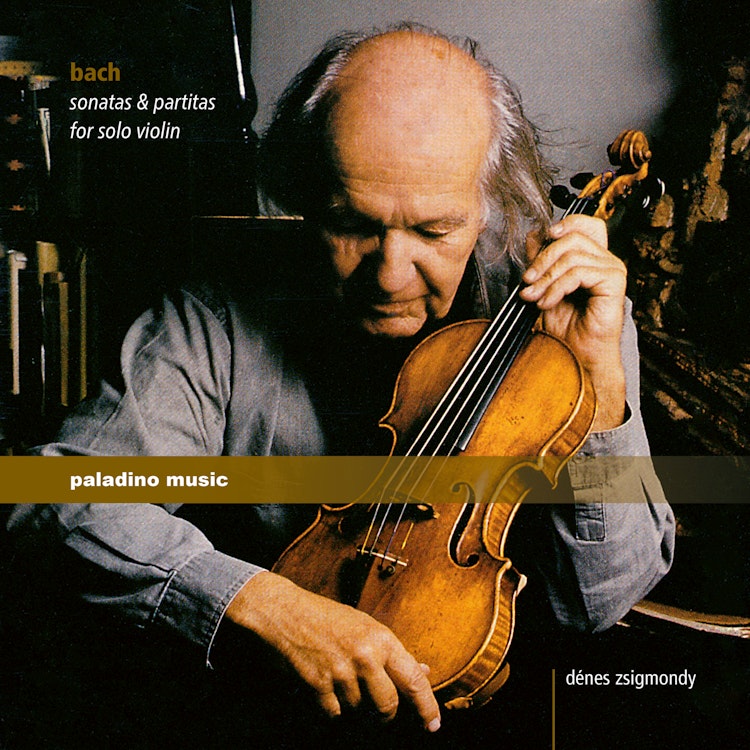
Dénes Zsigmondy, the violinist on this recording, changed his birth name, Dénes Hugo Liedemann, to his paternal grandmother's maiden name.
Composition History
The Sonatas and Partitas for solo violin were possibly dedicated to Johann Georg Pisendel, a renowned violinist of Bach's era, who introduced Bach to Antonio Vivaldi's music.
Composition History
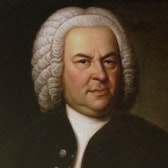
Johann Sebastian Bach composed his Works for Solo Violin BWV 1001-1006 between 1717 and 1723, during his time as Hofkapellmeister for Prince Leopold von Anhalt-Köthen.
Recording & Production
This recording was made in May 1995 when Dénes Zsigmondy, at 73, recorded himself alone in the Church of St. Johann Baptist in Holzhausen, without an engineer present.
Instruments
Dénes Zsigmondy performed on the 'Ernst' Stradivari violin from 1709, which was on loan to him from private benefactors.
You might also enjoy...
Bach: Complete Sonatas & Partitas for Violin Solo
J.S. Bach: Sonatas & Partitas
Bach
Bach: Sei Solo
Bach: The Six Sonatas & Partitas for Solo Violin
Bach, J.S.: Sonatas and Partitas for Violin Solo
Bach: The Sonatas and Partitas for Violin Solo
Bach - Solo Violin Sonatas
Bach: Complete Sonatas & Partitas
Bach: Sonatas & Partitas
Testament: Complete Sonatas and Partitas for Solo Violin by J. S. Bach
Bach, J.S.: Sonatas and Partitas for Solo Violin, Bwv 1001-1006