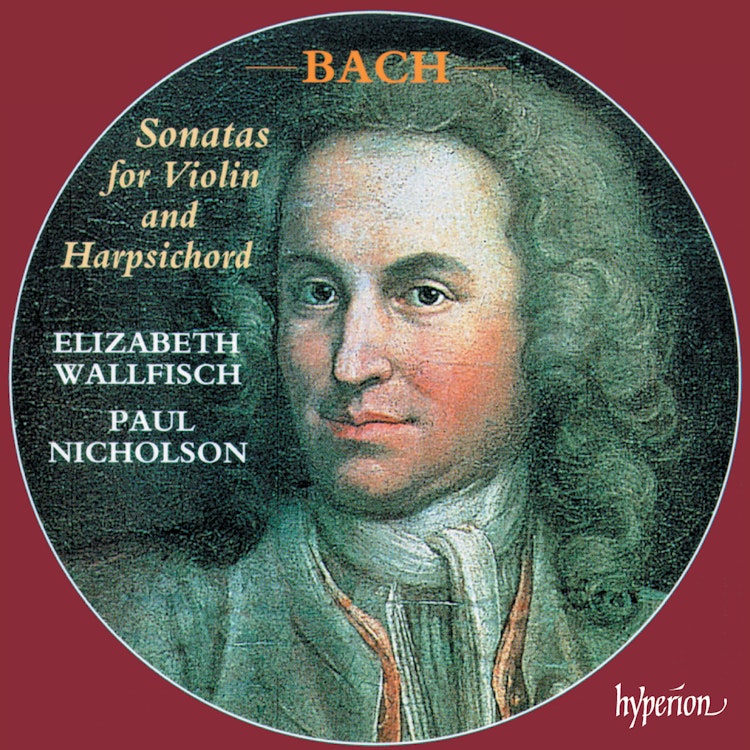
Bach: Sonatas for Violin & Harpsichord, BWV 1014-1019
5/10/2024, 38 Tracks, 2:03:40
Featuring
Elizabeth Wallfisch
Richard Tunnicliffe
Paul Nicholson
Johann Sebastian Bach
Did you know?
1/7
Cultural Impact
Bach's Six Sonatas for violin and harpsichord served as models for similar works by his sons, pupils, and followers, and influenced later composers like Mozart, Beethoven, and Schubert.
Composition History
The Fugue in G minor, BWV1026, was likely one of Bach's first attempts at the Italian ritornello pattern, popularized by Vivaldi, and was copied by Bach's cousin J.G. Walther around 1712.
Compositional Technique
The works on this album divide into two groups: solo sonatas with figured bass continuo, and trio sonatas where the harpsichord typically plays two of the three musical lines.
Composition History
Bach conceived the 'Sei Sounate' (Six Sonatas for violin and harpsichord) as a definitive and self-contained set, similar to his Brandenburg Concertos and Cello Suites.
Composer Biography
The G major Sonata, BWV1021, is attributed to J.S. Bach in a manuscript copied by his second wife, Anna Magdalena Bach.
Compositional Technique
The sixth sonata in the 'Sei Sounate' breaks the pattern of the others by having five movements instead of four, including an Allegro for harpsichord solo, and underwent several revisions.
Historical Context
These sonatas represent a crucial moment in 18th-century music when the keyboard began to take over the primary role from the violin in chamber music.
You might also enjoy...
J.S. Bach: Sonatas for Violin and Harpsichord
Bach, J. S.: 6 Sonatas for Violin and Harpsichord
Bach: Sonatas for Violin & Harpsichord Vol. 2
Sonatas for Violin and Harpsichord - Johann Sebastian Bach
Bach, J.S.: Sonatas for Violin and Harpsichord, Vol. 2 - 1017, 1018, 1019
Bach: 8 Violin Sonatas BWV 1014-1019, 1021, 1023
Bach: Violin Sonatas Vol. 2
Johann Sebastian Bach: The Sonatas for Violin and Cembalo Obbligato Vol. 2
Bach: The Complete Sonatas for Obbligato Harpsichord and a Melodic Instrument, Vol.1