From limited musical material, Johann Sebastian Bach consistently achieves great sonic substance and a miraculous balance between density and transparency in these sonatas.
Composer Biography
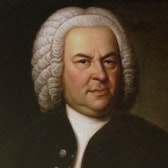
Johann Sebastian Bach's first biographer, Forkel, reported that Bach wrote these sonatas for his eldest son, Wilhelm Friedemann Bach, to help him become a great organist.
Compositional Technique
Unusually for organ music of the time, these sonatas are written on three staves—one each for the right hand, left hand, and feet on the pedalboard—reflecting a trio texture.
Composition History
Most of the eighteen movements in Bach's Trio Sonatas are adaptations of earlier chamber compositions, with only Sonata No. 6 possibly being a completely new work.
Composition History
The six Trio Sonatas for organ are generally dated to the years 1723-1725, a period when Johann Sebastian Bach was Kantor in Leipzig.
Composer's Artistic Vision
Bach's use of a perfectly legible three-stave layout for these sonatas encouraged performers to understand the contrapuntal texture and individualize each of the three parts.
You might also enjoy...
Bach: Sonate a 2 Clav. & Pedal, BWV 525 - 530
Bach: Orgelwerke (Organ Works)
D'agincour: Complete Organ Music
Bach, J.S.: Organ Chorales From the Neumeister Collection
De Torres: Complete Organ Music
Bach, J.S.: Organ Music, Vol. 7 - Orgelbuchlein (Das)
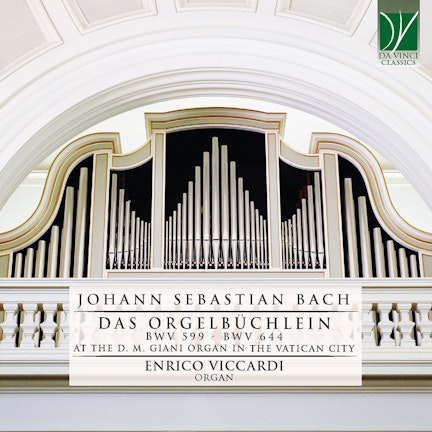
Johann Sebastian Bach: Das Orgelbüchlein
Van Noordt: Works for Organ, Vol. 2
Rinck: 12 Trios, Op. 20
Cabezón: Complete Keyboard Works, Vol. 4
Joseph Rheinberger: Organ Pieces, Vol. 3
Widor: Complete Organ Symphonies Vol. 1: Gothique & "Romane"
Bach, J.S.: Organ Works, Vol. 3 - Orgelbuchlein, Part 1