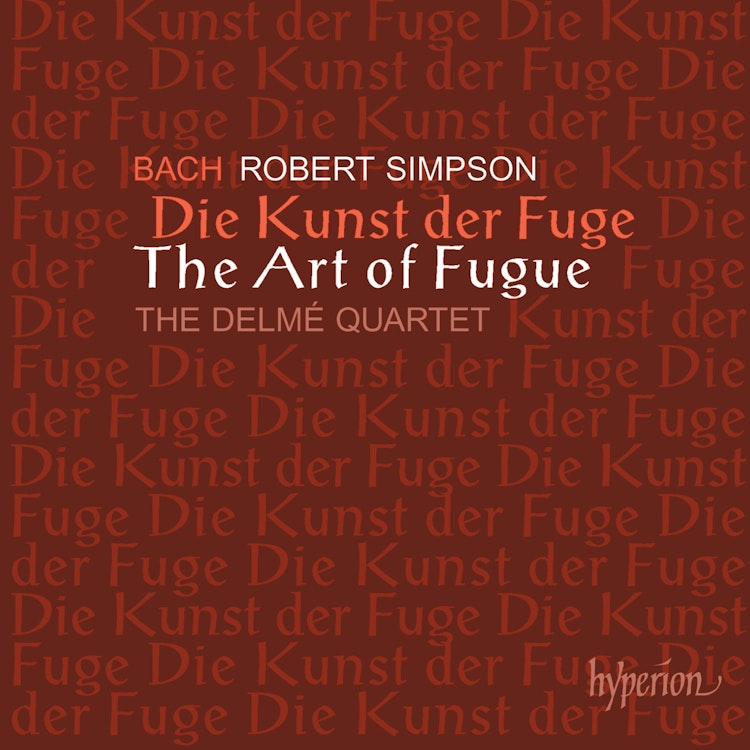
Bach: The Art of Fugue, Arr. for String Quartet by Robert Simpson
7/28/2023, 17 Tracks, 1:14:26
Featuring
Galina Solodchin
John Trusler
John Underwood
Jonathan Williams
Delmé Quartet
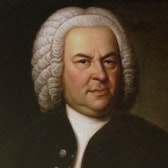
Johann Sebastian Bach
Did you know?
1/7
Performer Biography
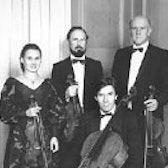
The Delmé Quartet, formed in 1962, has collaborated with many notable composers, including Robert Simpson, whose quartets they have recorded extensively.
Historical Context
The 20th-century revival of "The Art of Fugue" was largely due to Wolfgang Graeser, a young Swiss student who painstakingly unraveled its complexities and prepared an arrangement for various instruments in 1924.
Composer's Artistic Vision
Bach's primary goal in "The Art of Fugue" was to showcase the extensive possibilities of a single, simple musical theme through various fugal and canonic writing styles.
Interpretation
Robert Simpson, who arranged "The Art of Fugue" for this recording, transposed the work from D minor to G minor to make it accessible for a standard string quartet.
Composition History
Bach began working on "The Art of Fugue" in 1749 and, despite suffering from a fatal eye disease, nearly completed this profound undertaking in the year of his death (1750).
Compositional Technique
In the final, unfinished Contrapunctus XIV, Bach included the letters of his own name (B-A-C-H, which correspond to B flat, A, C, B natural in German musical notation) as a personal signature.
Critical Reception
After Bach's death, "The Art of Fugue" was initially regarded as a confusing, academic exercise due to its messy posthumous publication and lack of instrumentation instructions.
You might also enjoy...
Mendelssohn: String Quartet in E Flat Major '1823' & String Quartet in E Flat Major, Op. 44 No. 3
Mendelssohn: String Quartets Vol. 2
Spohr: String Quartets Vol. 5
Homage to Bach
Hummel: String Quartets, Op. 30 Nos. 1, 2 & 3
Mendelssohn: Streichquartett Es-Dur Op. 44 Nr. 3 - Schumann: Streichquartett A-Dur Op. 41 Nr. 3.
Schumann: String Quartets Op. 41
Krommer, F.: String Quartets, Op. 18
Schumann: The String Quartets
Campagnoli: 6 String Quartets
Paul Wranitzky: Three String Quartets
R. Schumann: String Quartet No. 3, Op. 41
Spohr: String Quartets Vol. 10
Mendelssohn: Lieder ohne Worte VIII, Op. 102: III. Presto, MWV U195 "Tarantelle" (Arr. Sitt for String Quartet) (Musical Moments)