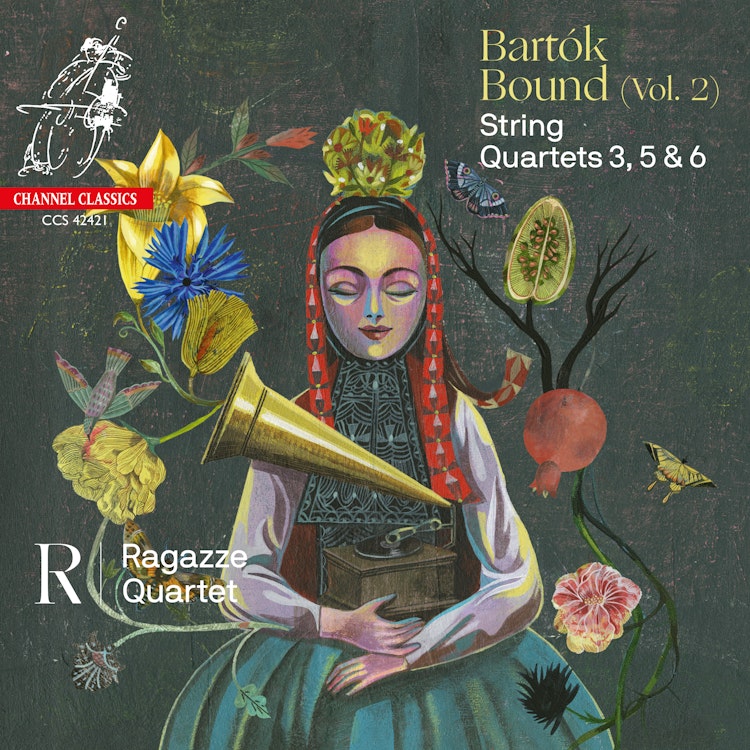
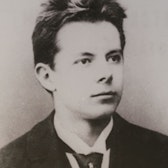
Béla Bartók made significant contributions to the string quartet genre throughout almost his entire compositional career, even sketching a seventh quartet in his final years in America.
Performer Biography
The Ragazze Quartet is known for its unconventional and attractive programs, collaborating with original voices in theatre, dance, and literature.
Composer Biography
Béla Bartók composed his Sixth String Quartet in 1939, shortly before leaving Hungary for the USA due to World War II, having previously expressed his aversion to Hitler and Nazism.
Compositional Technique
Bartók's Third String Quartet is among his most extreme compositions, featuring a hard and dissonant character, free chromaticism tending towards atonality, and sophisticated bowing techniques like glissando and col legno.
Composer's Artistic Vision
Béla Bartók, the composer, incorporated folk melodies from the Carpathian Basin, Turkey, and North Africa into his work, aiming to achieve his ideal of "the brotherhood of men."
Historical Context
According to Bartók scholar Elliott Antokoletz, the Treaty of Trianon in 1920, which significantly reduced Hungary's territory, influenced Bartók to integrate folk elements into a more cosmopolitan style in his Third String Quartet.
Composition History
Béla Bartók's Third String Quartet was inspired by an international chamber music competition in 1927 and won the prestigious Coolidge Prize.
You might also enjoy...
Shostakovich: String Quartets Nos. 1, 8 and 9
Felix & Fanny Mendelssohn: String Quartets
No. 3
Dmitri Shostakovich: String Quartets Nos. 14 & 15, Two Pieces, Op. 36
Mendelssohn, Verdi & Suk: Works for String Quartet