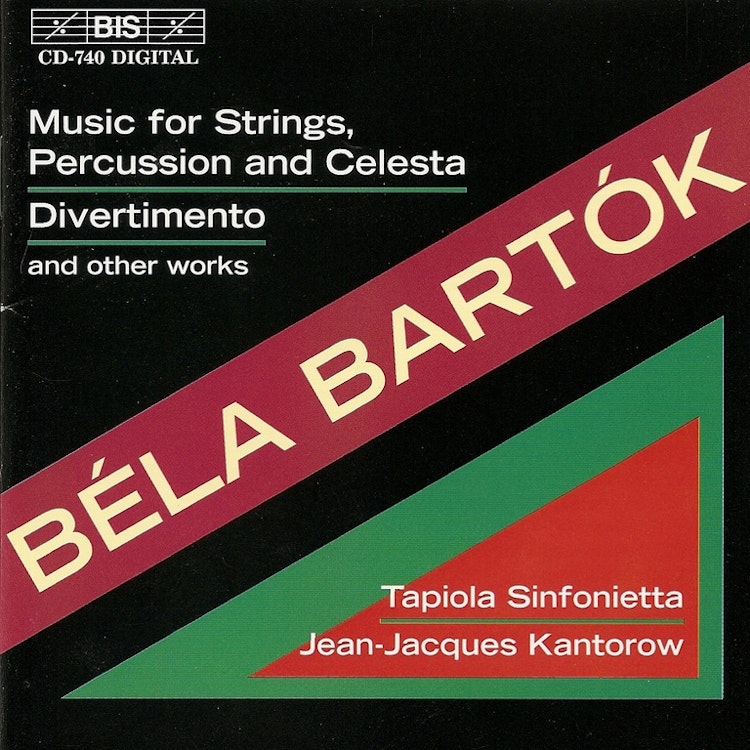
Bartok: Music for Strings, Percussion and Celesta / Divertimento and Other Works
10/31/1997, 28 Tracks, 1:13:35
Featuring
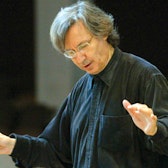
Jean-Jacques Kantorow
Hanna Juutilainen
Tapiola Sinfonietta
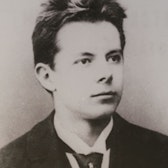
Béla Bartók
Paul Arma
Did you know?
1/7
Historical Context
Bartók's anti-chauvinist attitude is evident in his collection of folk music from Hungary, Romania, and other Balkan countries, despite facing criticism in Budapest for using Romanian melodies.
Compositional Technique
Bartók's Music for Strings, Percussion and Celesta features a unique symmetry, not only in musical structure but also in the specified seating plan of the ensemble.
Performer Biography
Jean-Jacques Kantorow, the conductor, is a highly awarded violinist, having won about ten international prizes between 1962 and 1968, including the Carl Flesch and Sibelius competitions.
Composer Biography
Béla Bartók was not only a great composer but also a pioneer in ethnomusicology, tirelessly collecting folk music before modern media influenced ancient musical traditions.
Composer's Artistic Vision
Bartók's mature style combines three ways of using folk material: arrangements beyond mere harmonization, longer works developing ethnic sources, and music displaying folk characteristics without specific melodies.
Composer's Artistic Vision
Bartók's research led to the 'discovery' of authentic Hungarian folk music, correcting the long-held misconception that it was identical to gypsy band music.
Compositional Technique
The Music for Strings, Percussion and Celesta employs a refined orchestration with unusual sonic effects, such as timpani glissandi and glissandi from the harp, piano, and celesta.
You might also enjoy...
Vaughan Williams: Orchestral works
Orchestral Music by Howard Blake
Verdi: String Quartet in E Minor / Rota: String Concerto / Puccini: 3 Minuets in A Major
Rutland Boughton: Aylesbury Games; Concerto for Strings & Other Works
Lane: Sleighbell Serenade / Prestbury Park / Three Christmas Pictures
Lane: Sleighbell Serenade / Prestbury Park / Three Christmas Pictures
Vaughan Williams: Fantasia on a Theme by Thomas Tallis & Orchestral Favourites, Vol. III