Bartók's Five Songs, Op. 16, written to poems by Endre Ady, are notable for their powerful expressiveness, erotic overtones, and a harmonic language that significantly departs from ordinary tonality.
Composer Biography
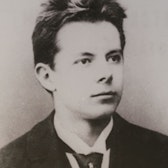
Béla Bartók, a renowned ethno-musicologist, gained an international reputation for his scholarly investigations of Central European folk music.
Composition History
Bartók completed his Dance Suite for orchestra in 1923 to celebrate the 50th anniversary of the merging of the cities of Pest, Buda, and Obuda.
Composer's Artistic Vision
Bartók aimed to develop a musical language devoid of sentimentality and superfluous ornamentation, reacting against what he considered mawkish excess.
Compositional Technique
The Dance Suite demonstrates Bartók's broad folkloric interests, with dances resembling Arabic, Magyar, and Romanian music, masterfully linked by a recurring 'ritornello' theme.
Performer Biography
Rolf Leanderson, a baritone on this recording, studied singing while training to be a doctor and was also a specialist in vocal disorders at the University Hospital in Stockholm.
Critical Reception
Bartók's Allegro Barbaro became one of his most popular works during his lifetime, though he was dismayed that people often requested it over his other compositions.
You might also enjoy...
Light & Darkness
Stephen Heller: Works for Piano
Liszt: Fantasias, etc. Derived from Operas
Lisztian Visions
Harsányi: Complete Piano Works, Vol. 2
Stanford: Complete Works for Piano Solo, Vol. 2
Liszt: Piano Sonata in E minor, 6 Paganini Etudes, Mephitso Waltz No.1