The Sonata for solo violin was commissioned by Yehudi Menuhin in 1943, after Bartók, who was ill, heard Menuhin perform his other violin works.
Compositional Technique
Bartók derived inspiration for Contrasts by listening to recordings of Benny Goodman's jazz trio, and also from the 'Blues' movement of Ravel's Violin Sonata.
Composer Biography
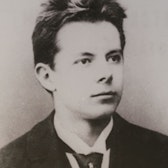
Béla Bartók, the composer, had close associations with first-rate violinists, including Yelly d'Aranyi, Jószef Szigeti, and Zoltán Székely, for whom he wrote several works.
Composition History
The work Contrasts for violin, clarinet and piano was commissioned by jazz clarinettist Benny Goodman, at the suggestion of violinist Jószef Szigeti.
Interpretation
The solo Sonata's finale offers alternative readings, including quarter-tone intervals or semitones; this recording uses Bartók's initial quarter-tone version, which was not in the original publication.
Composer's Artistic Vision
Bartók viewed his music as either settings of existing folk music or original compositions inspired by folk music, finding this a fertile combination.
Compositional Technique
Bartók included musical 'gags' in Contrasts, such as a parody of a wind-up gramophone running down and a mistuned violin that may be a jab at Saint-Saëns.
You might also enjoy...
Bartok, B.: Rhapsody No. 1 / Janacek, L.: Violin Sonata / Ravel, M.: Violin Sonata in G Major (The Roaring Twenties)