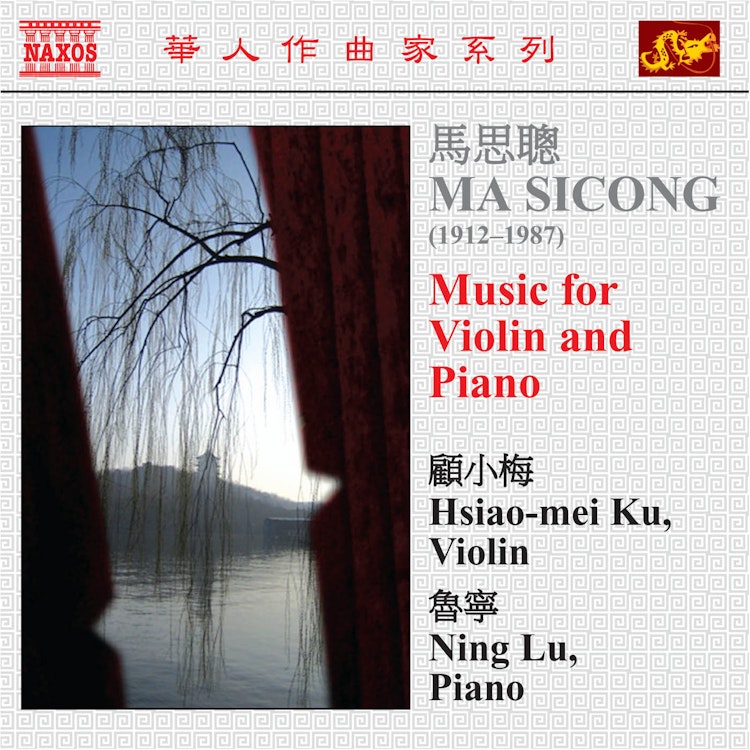
Hsiao-mei Ku, the violinist, incorporates an 'erhu-style' sound in her performance to mimic Chinese folk music and better capture the expression of Ma Sicong's musical soul.
Historical Context
During the Cultural Revolution, Ma Sicong was physically abused by Red Guards, leading him and his family to settle in the United States in the late 1960s.
Composer Biography
Ma Sicong, the composer, twice studied in France during the 1920s and 1930s, focusing first on violin and later on composition.
Composer's Artistic Vision
Ma Sicong devoted his life to creating a new national identity for Chinese music, pioneering the use of folk idioms and incorporating fragments from folk tunes into his compositions.
Performer Biography
Hsiao-mei Ku, the violinist on this album, was one of a few talented young musicians selected for professional training at the Central Conservatory in Beijing after nationwide auditions at age ten.
Compositional Technique
Ma Sicong's extensive musical output includes symphonies, concertos, chamber music, operas, ballet music, and vocal works, with his violin music considered among his most important contributions.
Composer Biography
Ma Sicong held prestigious positions in China, including President of the Conservatory of Music in Guangzhou and the Central Conservatory of Music in Beijing.
You might also enjoy...
Mythes
Reflets
Ravel, Janáček & Stravinsky: Works for Violin & Piano
3 American Sonatas
Post-scriptum
Lorquiana
Enescu/Bartók/Szymanowski etc.: Works for Violin & Piano
Isaac Stern - A Life in Music IV - Box Set
Presenting Joshua Bell / Kreisler
Lino Liviabella Works for Violin and Piano
David Oistrakh on Tour. Live in Vienna, 1968
5 Decades of Treasured Performances: Camilla Wicks (Live)