Bartók's Second Suite, originally conceived as a Serenade for small orchestra, was where he first wove folk elements into his musical language.
Composer Biography
Béla Bartók, the composer, contracted the Spanish flu in October 1918 but survived, unlike millions of others.
Critical Reception
The Miraculous Mandarin was considered so "offensively realistic" that it was censored and cut for its Budapest premiere.
Composer Biography
Bartók was spared from military service in the Austro-Hungarian Army during World War I after failing several medical examinations.
Recording & Production
This recording of The Miraculous Mandarin uses a recently discovered original score, allowing listeners to hear the work without the censored cuts from its premiere.
Composition History
Bartók began sketching ideas for The Miraculous Mandarin in late summer 1917, developing its scenario from a libretto by Hungarian author Menyhért Lengyel.
Historical Context
Bartók's Miraculous Mandarin channels the violence and horror of the collapse of the first Hungarian Soviet Republic and the subsequent Red and White Terrors of 1919-21.
You might also enjoy...
Bartok, B.: The Miraculous Mandarin Suite / Dance Suite / Music for Strings, Percussion and Celesta
Bartok: Concerto for Orchestra / Dance Suite / Hungarian Peasant Songs
Bartók: Four Orchestral Pieces & Music for Strings, Percussion & Celesta
Bartok: Concerto for Orchestra, Miraculous Mandarin Suite & Two Pictures for Orchestra
Bartók: Concerto for Orchestra, Four Orchestral Pieces & Hungarian Peasant Songs
Béla Bartók: Music For Strings, Percussion & Celesta
Bartok: Concerto for Orchestra etc
Doráti conducts Bartók
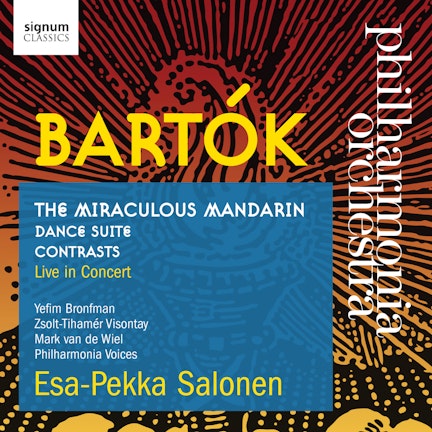
Bartók: The Miraculous Mandarin - Dance Suite - Contrasts