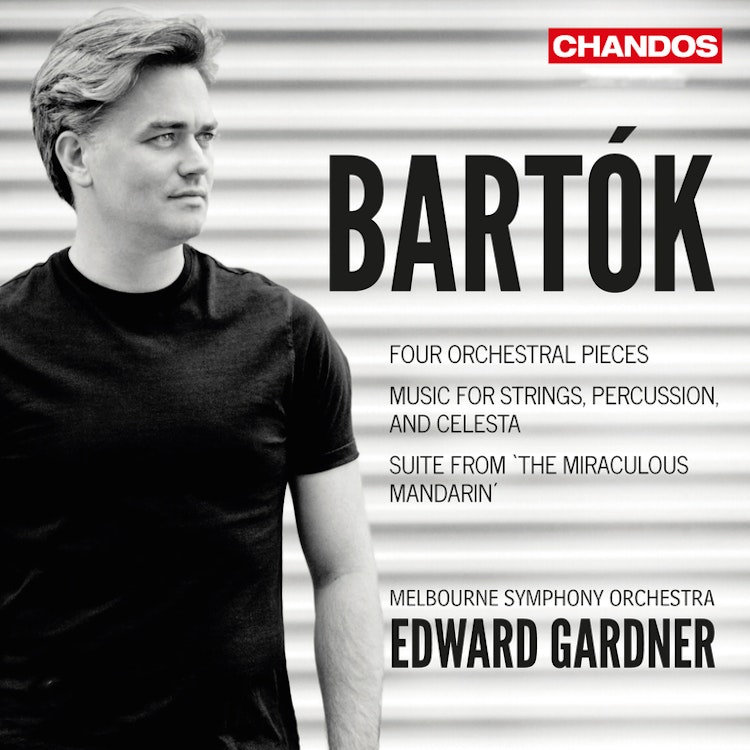
Bartók: Four Orchestral Pieces & Music for Strings, Percussion & Celesta
11/5/2013, 9 Tracks, 1:13:18
Featuring
Edward Gardner
Melbourne Symphony Orchestra
Béla Bartók
Did you know?
1/7
Composition History
Bartók created the concert suite from The Miraculous Mandarin by cutting the last third of the ballet after it was banned and not staged again during his lifetime.
Composer Biography
Bartók withdrew from musical life in Budapest in 1912, resigning himself to compose "for my writing-desk only" due to his music being misunderstood or ignored.
Composer's Artistic Vision
The Miraculous Mandarin explores the antagonism between unaffected nature (the mandarin) and corrupted modernity (the gang), with the young woman as mediator.
Compositional Technique
Bartók's Music for Strings, Percussion, and Celesta is scored for two string orchestras, placed on opposite sides of the platform to create a dialogue of sound and form.
Critical Reception
Bartók's ballet The Miraculous Mandarin was banned immediately after its 1926 premiere in Cologne due to its controversial subject matter.
Composition History
Bartók's Music for Strings, Percussion, and Celesta was commissioned by the Swiss patron-conductor Paul Sacher to mark the tenth anniversary of his Basle Chamber Orchestra.
Compositional Technique
The first movement of Music for Strings, Percussion, and Celesta builds to a climax on E flat, the tritone opposite of its initial A, before retracing its steps back to A.
You might also enjoy...
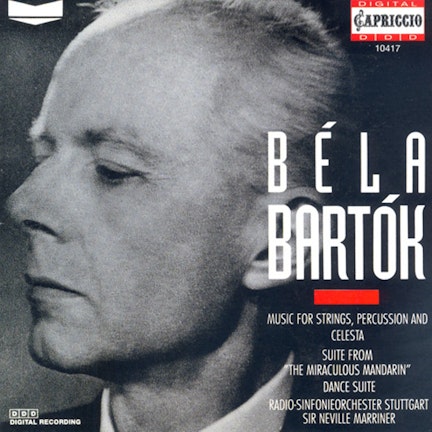
Bartok, B.: The Miraculous Mandarin Suite / Dance Suite / Music for Strings, Percussion and Celesta
Bartok: The Miraculous Mandarin
Bartók: Miraculous Mandarin Suite & Music for Strings, Percussion and Celesta
Bartok: The Miraculous Mandarin / Music for Strings, Percussion and Celesta
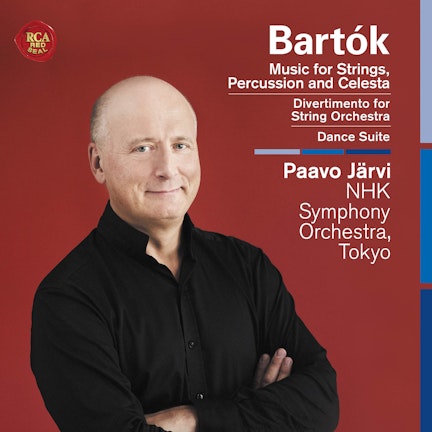
Bartók: Music for Strings, Percussion and Celesta, Divertimento for String Orchestra, Dance Suite
Bartok Triptych
Bartók: Concerto for Orchestra, Four Orchestral Pieces & Hungarian Peasant Songs
Bartok: Concerto for Orchestra / Dance Suite / Hungarian Peasant Songs
Béla Bartók: Music For Strings, Percussion & Celesta
Bartok: Concerto for Orchestra etc
Bartók: Music For Strings, Percussion, And Celesta / Dance Suite
Bartók: Music for Strings, Percussion and Celesta; Kodaly: Hary Janos