Bartók: The Miraculous Mandarin - Concerto for Orchestra
9/6/2012, 17 Tracks, 1:07:38
Featuring
Gerard Schwarz
Seattle Symphony
Seattle Symphony Chorale
Béla Bartók
Did you know?
1/7
Composition History
Bartók's pantomime, The Miraculous Mandarin, was banned immediately after its first performance in Cologne in 1926 on moral grounds by Mayor Konrad Adenauer.
Compositional Technique
The Miraculous Mandarin, a pantomime rather than a ballet, focuses on the irreconcilability of intuitive nature and corrupt civilization, as conceived by scenario writer Menyhért Lengyel.
Composer Biography
Bartók emigrated to the United States of America in 1940 due to dissatisfaction with the Hungarian government's association with National Socialist Germany.
Composition History
Bartók's Concerto for Orchestra was commissioned by the Koussevitzky Music Foundation in 1943 in memory of Nathalie, the wife of conductor Sergey Koussevitzky.
Compositional Technique
The Concerto for Orchestra displays the virtuoso talents of different sections of the orchestra through textural and dynamic contrast, justifying its title.
Composer Biography
Béla Bartók, a Hungarian composer, developed a deep interest in the folk music of his own and adjacent countries, extending his research to Anatolia.
Performer Biography
Gerard Schwarz, the conductor for this album, was Music Director of the Seattle Symphony from 1985 to 2011 and has received two Emmy Awards and thirteen GRAMMY® nominations.
You might also enjoy...
Bartók: Concerto for Orchestra; Miraculous Mandarin
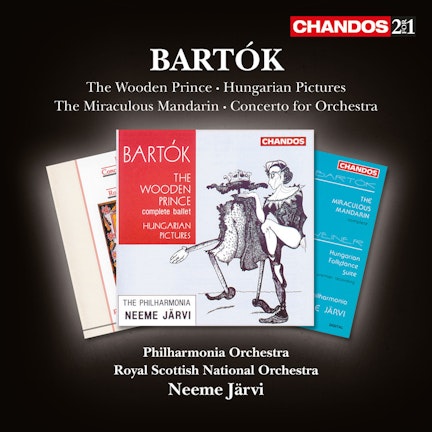
Bartók: The Wooden Prince, Hungarian Sketches, The Miraculous Mandarin & Concerto for Orchestra
Verdi: Ballet Music; Leoni: The Prayer & The Sword
Saint-Saens: Javotte / Parysatis
Stravinsky: The Rite of Spring / Bartók: Concerto for Orchestra
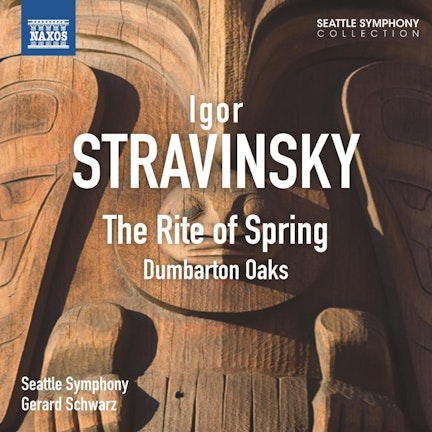
Stravinsky: The Rite of Spring & Dumbarton Oaks
Danielpour: Concerto for Orchestra
Stravinsky: Apollon Musagète / Bartók: Music for Strings, Percussion and Celesta