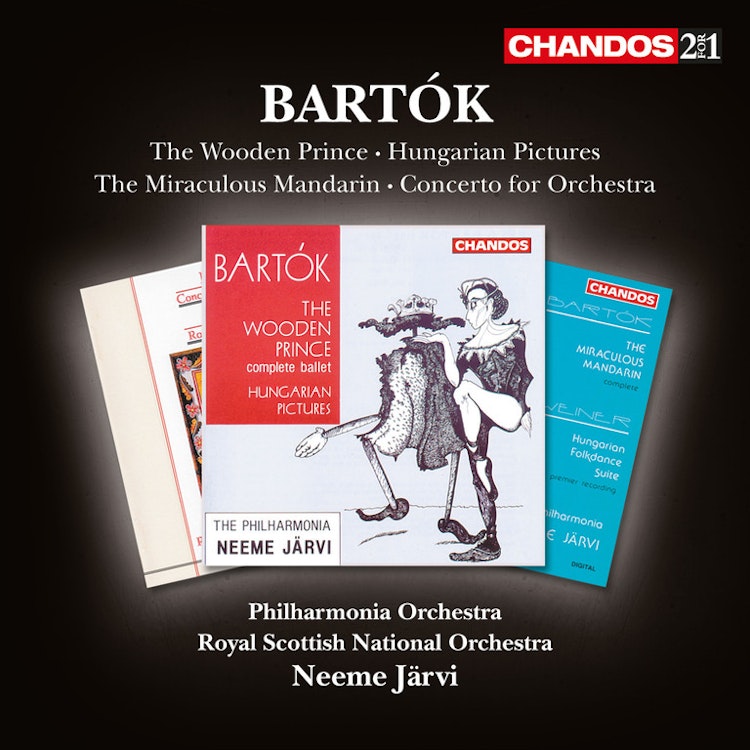
Bartók: The Wooden Prince, Hungarian Sketches, The Miraculous Mandarin & Concerto for Orchestra
7/1/2014, 28 Tracks, 2:21:18
Featuring
Neeme Järvi
Philharmonia Orchestra
London Voices
Royal Scottish National Orchestra
Béla Bartók
Did you know?
1/7
Composition History
The Concerto for Orchestra was commissioned by Serge Koussevitzky, the conductor of the Boston Symphony Orchestra, who provided a commission and a partial payment to Bartók while he was ill.
Compositional Technique
Bartók's Hungarian Pictures are orchestral arrangements of earlier piano pieces, some based on actual folksongs and dances, others drawing on the peasant idiom.
Composition History
The Wooden Prince, a dance-pantomime, was created by Bartók in the hope of forming a double bill with his opera Duke Bluebeard's Castle, which was awaiting its first performance.
Composition History
Bartók composed the Concerto for Orchestra in his last year of life, after a four-year period of creative inactivity following his arrival in New York as a refugee from fascism.
Critical Reception
The premiere of The Wooden Prince on May 12, 1917, was an enormous success, despite predictions of a fiasco from the Budapest Opera.
Critical Reception
The Miraculous Mandarin caused such an outcry at its 1926 Cologne premiere that the city's mayor banned it before a second performance could take place.
Composer Biography
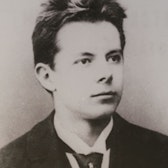
Béla Bartók, the composer, had a career marked by disappointments, but his dance-pantomime The Wooden Prince was one of his greatest successes.
You might also enjoy...
Stravinsky: Apollon Musagète / Bartók: Music for Strings, Percussion and Celesta
Bartók: The Miraculous Mandarin - Concerto for Orchestra
Bartok: The Wooden Prince & Hungarian Pictures
Bartók: Concerto for Orchestra; Miraculous Mandarin
Stravinsky: The Complete Ballets & Symphonies
Poulenc: Orchestral Works 2
Falla: El sombrero de tres picos / Ibert: Escales / Ravel: Daphnis & Chloë
Offenbach: Gaîté parisienne - Ibert: Divertissement for Small Orchestra
Copland: El Salón México; Suites: Rodeo & Billy the Kid; Appalachian Spring
Copland: Billy the Kid, Rodeo, El Salón México & An Outdoor Overture