In 18th-century Germany and Central Europe, two main wind ensembles predominated: the 'Harmonie' (pairs of oboes, clarinets, horns, bassoons) and the wind quintet (flute, oboe, clarinet, horn, bassoon).
Recording & Production
This album was recorded in Bavaria Musikstudios, Munich, Germany, from January 3-5 and April 4, 2016, and is a co-production with BR-Klassik and Les Vents Français.
Composition History
The Trio in G for piano, flute, and bassoon, one of Beethoven's earliest works, was likely written around 1786 for Count Friedrich von Westerholt, an amateur bassoonist and equerry to the Elector of Bonn.
Composer Biography
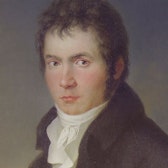
Ludwig van Beethoven, frustrated in his desire to study with Mozart who had died in 1791, became a pupil of the elderly Joseph Haydn in 1792.
Composition History
The Variations on 'Là ci darem la mano' from Mozart's Don Giovanni were not published until 1914, despite being performed in 1797 by oboists Teimer, Czerwenka, and Reuter.
Historical Context
Most wind instruments were originally played outdoors, with their medieval ancestors' 'rude sounds' ruling out domestic use until they were gradually 'tamed' for chamber settings.
Composition History
Beethoven's Horn Sonata in F, published in 1801, was composed for Giovanni Punto, a Bohemian horn player who had perfected the technique of altering pitch by inserting a hand into the bell.
You might also enjoy...
Beethoven 2020 – Chamber Music 4: Large Works
Beethoven: The Complete Chamber Music with Winds
Springtime - Ludwig van Beethoven
Beethoven: Unknown Masterworks
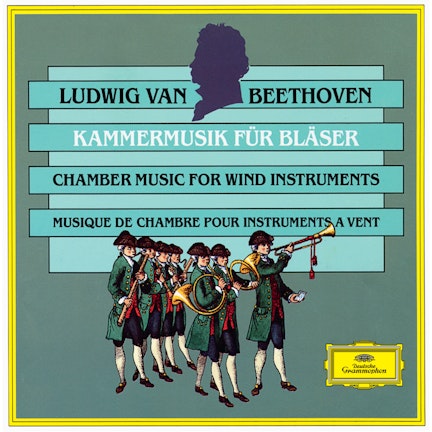
Beethoven: Kammermusik Für Bläser - Chamber Music For Wind Instruments - Musique De Chambre Pour Instruments Á Vent