Due to the lightweight tone and limited sustaining power of pianos of his time, Beethoven had to forego exploiting the cello's cantabile playing and writing true slow movements until his very last sonata.
Compositional Technique
The D major Sonata, Op 102 No 2, is the first occasion where Beethoven uses a fugue as the basis of a movement, marking the beginning of the contrapuntal thinking that dominated his final years.
Compositional Technique
Beethoven created a new instrumental form with these historic works, as earlier cello and keyboard duos had a Baroque continuo-type accompaniment, unlike his concept of two equal partners.
Composer's Artistic Vision
Beethoven highly valued Mozart and Handel, even more than J.S. Bach, and was often found with their compositions on his desk.
Composition History
Beethoven's works for cello and piano span much of his compositional career, with each of his three stylistic periods represented by a sonata or pair of sonatas.
Composition History
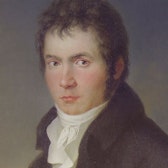
The two Sonatas of Op 5 were written in 1796 while Beethoven was in Berlin, where he extended his tour due to the success his art was bringing him.
Notable Performances
Beethoven performed the Op 5 Sonatas for the first time in Vienna in early 1797 with cellist Bernhard Romberg, a former colleague from the Bonn court orchestra.
You might also enjoy...
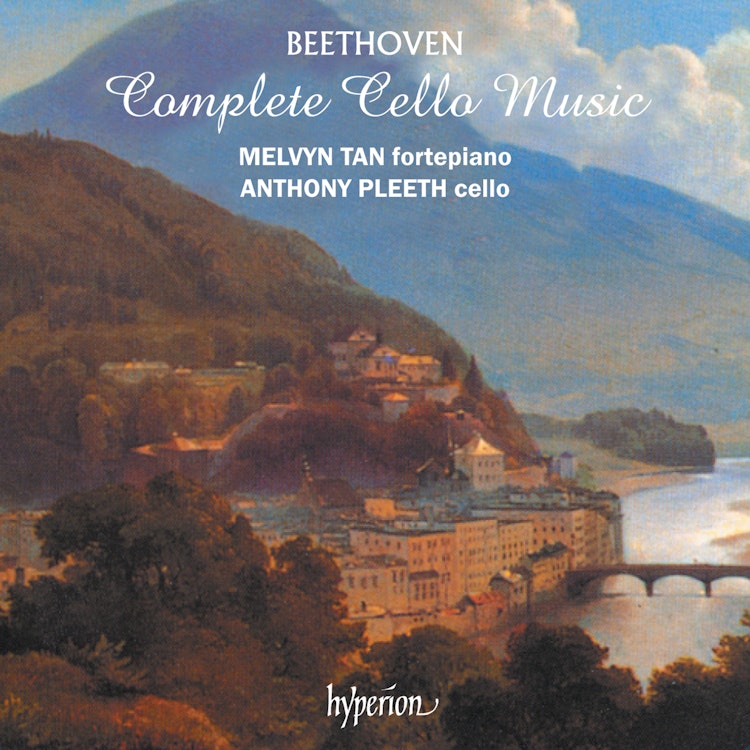
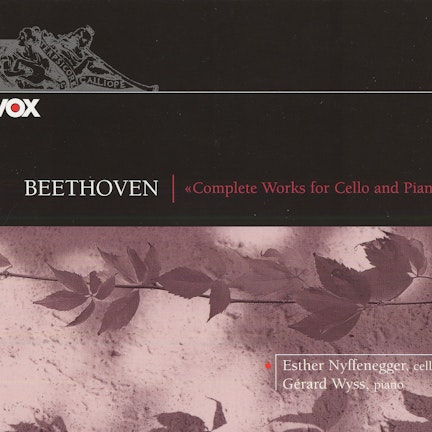
Beethoven, L. Van: Cello and Piano Music (Complete)
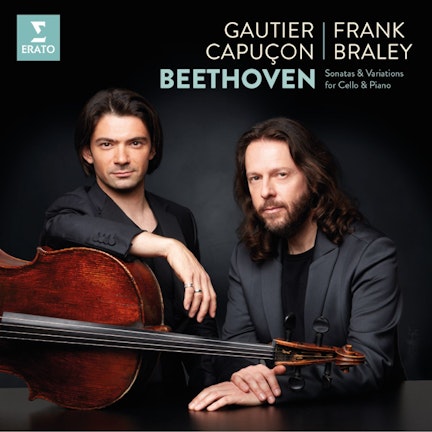
Beethoven: The Sonatas & Variations for Cello and Piano