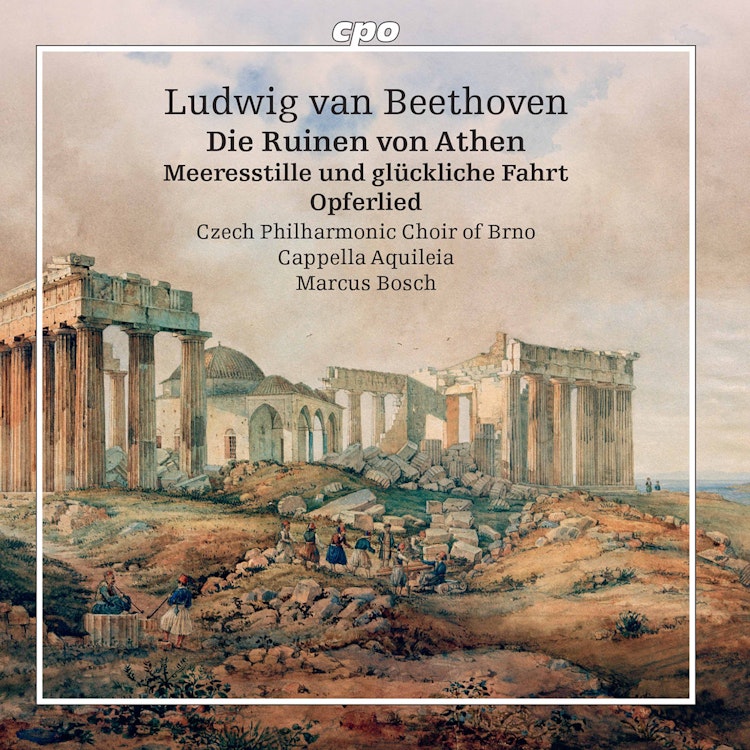
Beethoven: Die Ruinen von Athen, Op. 113 & Other Works
8/14/2020, 21 Tracks, 53:27
Featuring
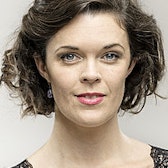
Valda Wilson
Simon Bailey
Sidonie von Krosigk
Marcus Bosch
Cappella Aquileia
Czech Philharmonic Choir Brno
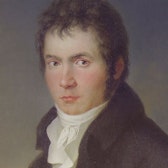
Ludwig van Beethoven
Did you know?
1/7
Composition History
Beethoven worked on his 'Opferlied' for most of his composing life, with initial sketches from 1794/95 and the final version completed two years before his death in 1825.
Cultural Impact
Beethoven's music and persona influenced literary works, with Leo Tolstoy's 'Kreutzer Sonata' inspired by his Violin Sonata No. 9 and Thomas Mann dedicating a chapter to Piano Sonata Op. 111 in 'Doctor Faustus'.
Composer Biography
Beethoven was close friends with Viennese author and playwright Franz Grillparzer, who wrote the eulogy for Beethoven's funeral.
Composition History
Beethoven's 'Die Ruinen von Athen' was incidental music composed for the 1812 opening of the Pest Theatre, based on a play by August von Kotzebue.
Performer Biography
The Czech Philharmonic Choir of Brno, founded in 1990, is one of Europe's most sought-after professional ensembles, having won ECHO Klassik awards for 'Best Vocal Ensemble' and 'Recording of the Year'.
Composer's Artistic Vision
The final words of 'Opferlied', 'Das Schöne zu dem Guten' (Both beauty and goodness), seem to reflect Beethoven's belief in the moral purpose of music.
Composer Biography
Beethoven was completely deaf when his choral cantata Op. 112, 'Meeresstille und glückliche Fahrt', premiered in 1815, only hearing the music in his imagination.
You might also enjoy...
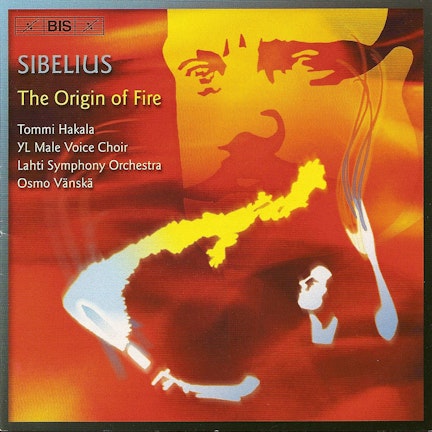
Sibelius: Tulen Synty (The Origin of Fire) Original and Revised Versions
Langgaard: Music of the Spheres / 4 Tone Pictures
Sibelius, J.: Sibelius Edition, Vol. 3 - Voice and Orchestra
An English Coronation, 1902-1953
Choruses for Male Voices and Orchestra
Gold
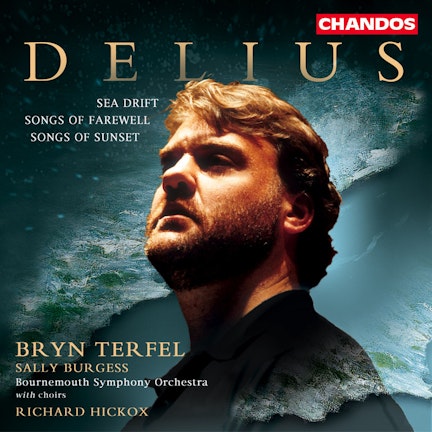
Delius: Sea Drift, Songs of Farewell & Songs of Sunset
Beethoven: Mass in C Major / Elegischer Gesang / Meeresstille Und Gluckliche Fahrt
Delius: Sea Drift / Songs of Farewell / Songs of Sunset
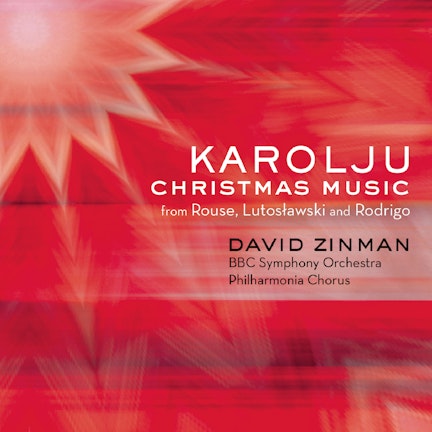
Karolju - Christmas Music from Rouse, Lutoslawski and Rodrigo
Hugo Distler: Choral Works
Stenhammar / Heise / Lange-Muller / Malling / Nielsen / Grieg: Songs for Baritone and Orchestra