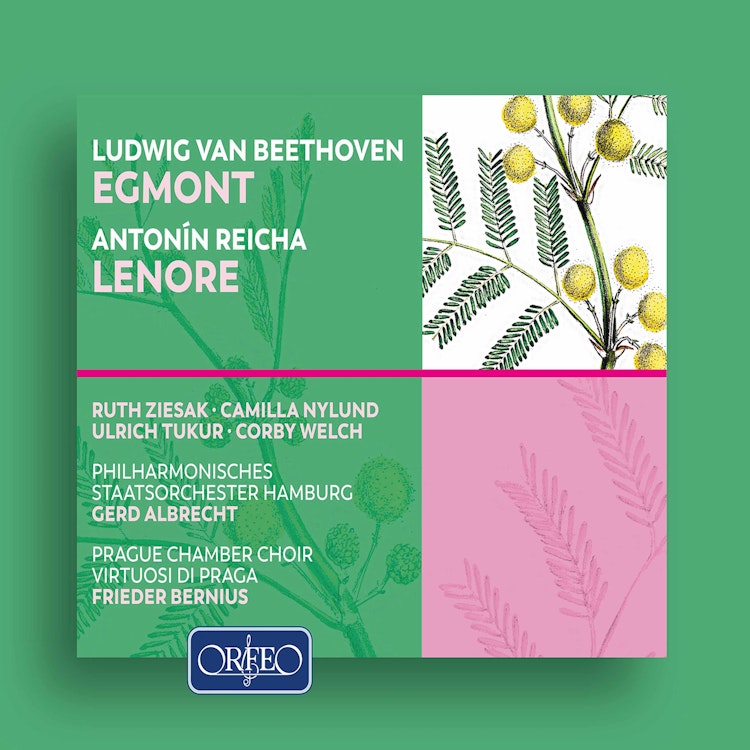
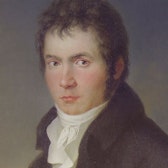
Beethoven's incidental music for Goethe's play 'Egmont' was composed in the winter of 1809/10 for a performance at the Burgtheater in Vienna.
Composer Biography
Reicha became an important professor at the conservatory in France, where he taught notable composers such as Liszt, Berlioz, Gounod, Franck, Flotow, and Onslow.
Compositional Technique
Reicha's cantata 'Lenore' extensively savors the dramatic content of Bürger's ballad, with Lenore's ghostly journey occurring early in the score, followed by 17 tracks depicting the ghastly ride and spooky magic.
Composer's Artistic Vision
Beethoven, an ardent admirer of Goethe's drama, reportedly waived his payment to secure the commission for the 'Egmont' incidental music.
Historical Context
Beethoven's 'Egmont' music was inspired by Napoleon's conquering expeditions in Austria, with the story of Egmont von Gavre serving as a parallel to Austria's conflict with the French.
Composer Biography
Antonín Reicha, a Bohemian composer, published his works under three different versions of his first name (Antonín, Anton, Antoine) reflecting his influence across Europe.
Cultural Impact
Gottfried August Bürger's ballad 'Lenore', which Reicha set to music, was a literary 'smash hit' across Europe in its time and remained one of the best-known German epic poems until the 20th century.
You might also enjoy...
Bizet: Carmen (Excerpts) (Sung in Hungarian)
Mendelssohn - A Midsummer Night's Dream Opp. 21 & 61
Mendelssohn: Ein Sommernachtstraum (A Midsummer Night's Dream - Complete Melodrama)
Debussy: 3 Chansons de Bilitis, L. 96 - Hindemith: Hérodiade
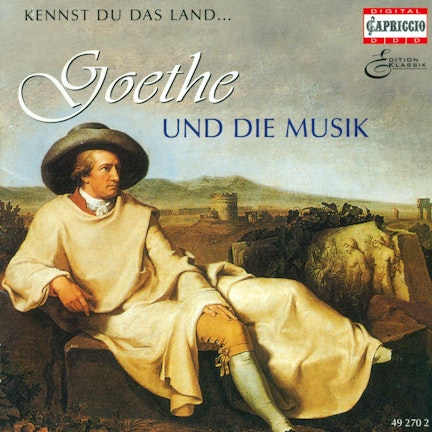
Goethe And Music, Vol. 1 - Beethoven, L. Van / Mendelssohn, Felix / Gounod, C.-F. / Berlioz, H. / Massenet, J. / Mahler, G. / Spohr, L. / Boito. A