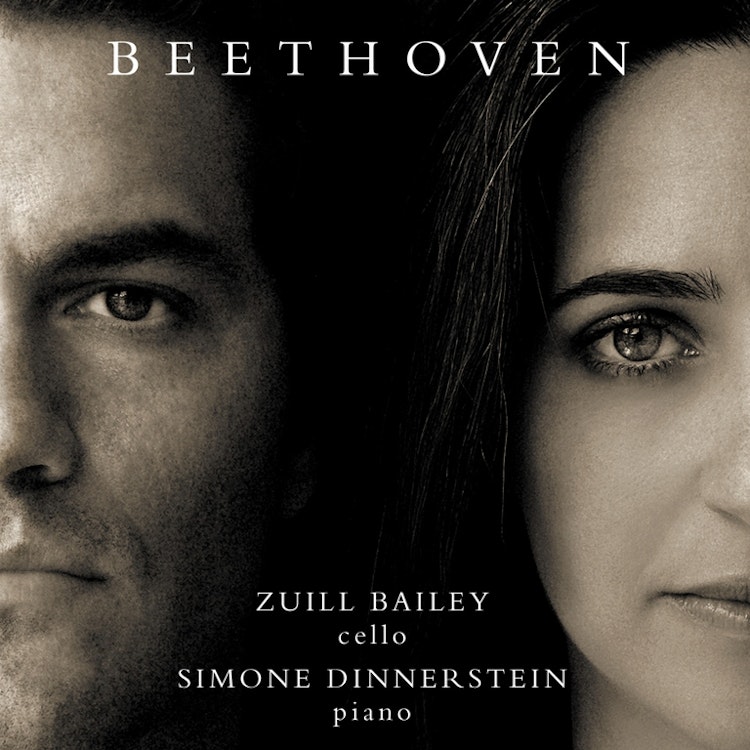
Beethoven's cello and piano works show him as both a revolutionary, breaking classical molds, and a traditionalist, rooted in Haydn and Mozart's principles.
Historical Context
In Beethoven's era, the cello was typically confined to providing bass support, with melody usually in the soprano range, often dominated by the violin in instrumental music.
Composition History
Beethoven composed his first two cello sonatas (Op. 5 Nos. 1 and 2) in 1796 after being impressed by the skills of Jean-Pierre Duport, a great cellist at the Berlin court.
Compositional Technique
Beethoven's Cello Sonatas often have unusual formal layouts, with none in the traditional four movements, and some, like Sonatas Nos. 1 and 2, are two-movement pieces.
Composition History
Beethoven took a revolutionary step by composing for cello and piano in 1796, as neither Haydn nor Mozart had produced a single work for this combination.
Instruments
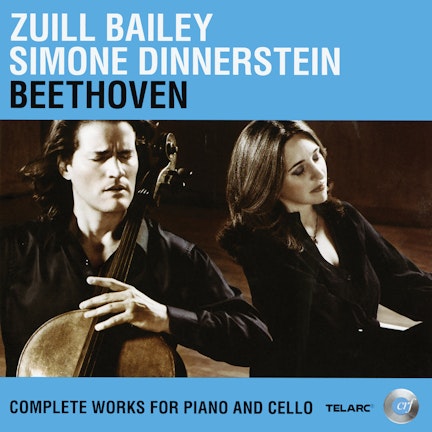
Pianist Simone Dinnerstein uses a 1903 Hamburg Steinway model D concert grand piano for this recording, which remarkably survived the bombing of Hull in WWII.
Instruments
Cellist Zuill Bailey performs on a 1693 Matteo Gofriller cello, a Venetian instrument formerly owned by Mischa Schneider of the Budapest String Quartet.
You might also enjoy...
Beethoven: Complete Works for Piano & Cello
Jadin: Piano Sonatas, Op. 4-6
Riley: Keyboard Studies Nos. 1 & 2 and Tread on the Trail
World's Greatest Piano Rags
Lyrical Baritone
Brillon de Jouy: The Piano Sonatas Rediscovered
The Nannette Streicher Fortepiano
New Enchantments
Mozart, W.A.: Violin Sonatas Nos. 17, 18, 24 and 27 (Arr. for Flute and Piano)
J.S. Bach, C.P.E. Bach & P. Seabourne: Toccatas & Fantasies