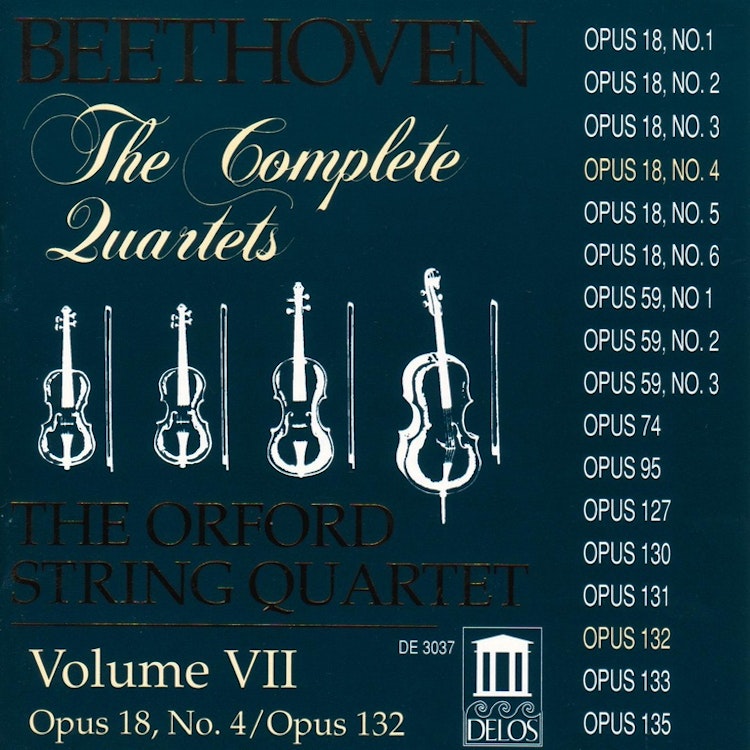
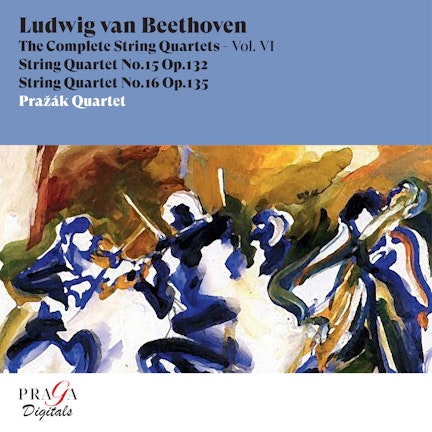
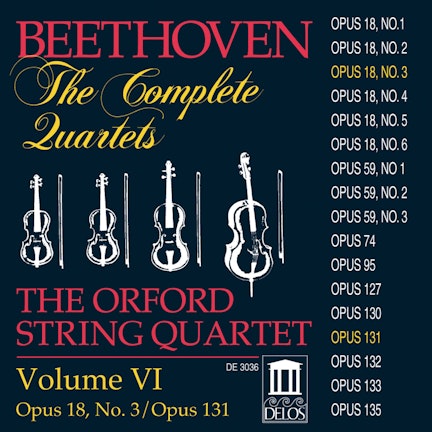
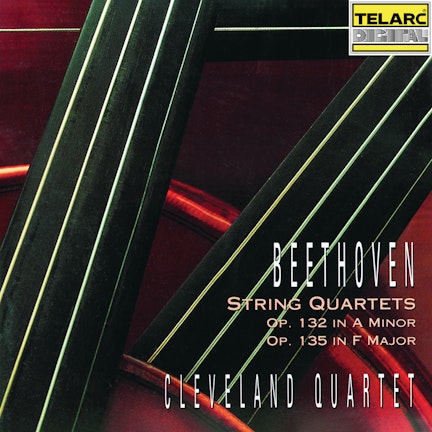
Beethoven's recovery from illness is immortalized in Opus 132 by the inscription over the Molto Adagio: 'Heiliger Dankgesang eines Genesenen an die Gottheit, in der lydischen Tonart' (Hymn of thanksgiving to the Almighty, in the Lydian mode, offered by a convalescent).
Composer Biography
Beethoven wrote to his friend, the violinist Karl Amenda, that he had "greatly changed" an early draft of Opus 18 No. 1, stating he had "only now learned how to write quartets properly."
Recording & Production
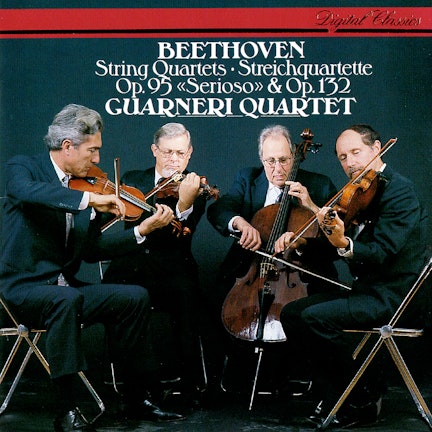
This album was recorded in Emmanuel Presbyterian Church in Toronto, Canada, with sessions for Opus 18 No. 4 in March-April 1986 and Opus 132 in May-June 1985.
Composition History
Beethoven spent over two years composing his six String Quartets, Opus 18, and considered this a serious challenge.
Composition History
Beethoven's health was perilous when he wrote his late quartets, and a serious abdominal ailment in 1825 interrupted his work on Opus 132.
Composer's Artistic Vision
When the violinist Schuppanzigh complained that a passage was unplayable, Beethoven famously retorted, "Do you think that I care for your damned fiddle when the spirit seizes me?"
Composer's Artistic Vision
Beethoven once told a critic who was bewildered by one of his 'Razumovsky' quartets, "Oh they are not for you, but for a later age!"
You might also enjoy...
Beethoven: String Quartets Nos. 15 & 16
Beethoven: String Quartets Nos. 9 & 14
Beethoven: The Late String Quartets
Beethoven, L. Van: String Quartets (Complete), Vol. 6 - Nos. 3, 14
Beethoven: String Quartets Op. 132, Op. 135
Beethoven: String Quartet No. 15 in A Minor, Op. 132 & String Quartet No. 16 in F Major, Op. 135
Beethoven: String Quartets Nos. 11 & 15
Beethoven: String Quartet in C-Sharp Minor, Op. 131 & String Quartet in F Major, Op. 135