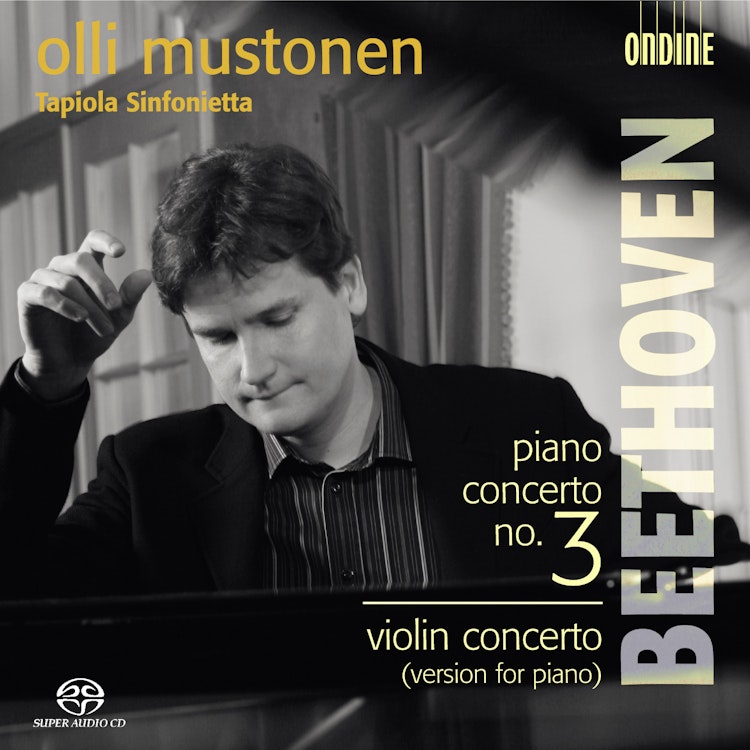
Beethoven, L. Van: Piano Concerto No. 3 / Piano Concerto in D Major, Op. 61A
7/1/2000, 6 Tracks, 1:14:33
Featuring
Olli Mustonen
Tapiola Sinfonietta
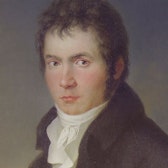
Ludwig van Beethoven
Did you know?
1/7
Compositional Technique
Beethoven borrowed the enharmonic change G sharp/A flat from his teacher Joseph Haydn's Piano Sonata in E flat major, Hoboken XVI:52, to create subtle unity from contrasting movements in his C minor Concerto.
Composer's Artistic Vision
Beethoven's cadenzas for the piano version of the Violin Concerto include the daring combination of piano and timpani, reflecting a contemporary tribute to the military character of the piano concerto.
Recording & Production
This album is part of a long-term collaboration between Olli Mustonen and Ondine, which includes the recording of all Beethoven Piano Concertos with the Tapiola Sinfonietta.
Composition History
The Piano Concerto in D major, Op. 61a, is Beethoven's own arrangement of his Violin Concerto, created at the request of Muzio Clementi, a London publisher and piano manufacturer.
Composition History
Beethoven's Piano Concerto No. 3 was not initially written in a coherent fashion, with sketches dating back to 1796, and was only fully completed for the orchestra by its premiere in 1803.
Composer Biography
Beethoven's cadenzas for Mozart's D minor Piano Concerto, K. 466, from 1809/10, demonstrate both his veneration for Mozart and his own artistic ambition.
Performer Biography
Olli Mustonen, the pianist and conductor on this album, began his studies in piano, harpsichord, and composition at the age of five in Helsinki.
You might also enjoy...
Beethoven, L. van: Piano Concertos Nos. 1 and 3
Beethoven: Piano Concertos Nos. 1 & 2
Beethoven: Piano Concertos Nos. 1 & 4
Beethoven: Piano Concerto N°3 & 4
Beethoven: Piano Concertos Nos. 1 & 2
Beethoven: Piano Concertos Nos.2 & 4
Beethoven: Piano Concerto No. 3 in C Minor, Op. 37
Beethoven: Piano Concerto No. 1 in C Major, Op. 15
Beethoven: Piano Concertos Nos. 1 & 2 (Live)
Beethoven: Piano Concerto No. 1 in C Major, Op. 15
Beethoven: Piano Concertos Nos. 1 & 2
Beethoven, L. Van: Piano Concertos, Vol. 2 (Biret) - Nos. 3, 4