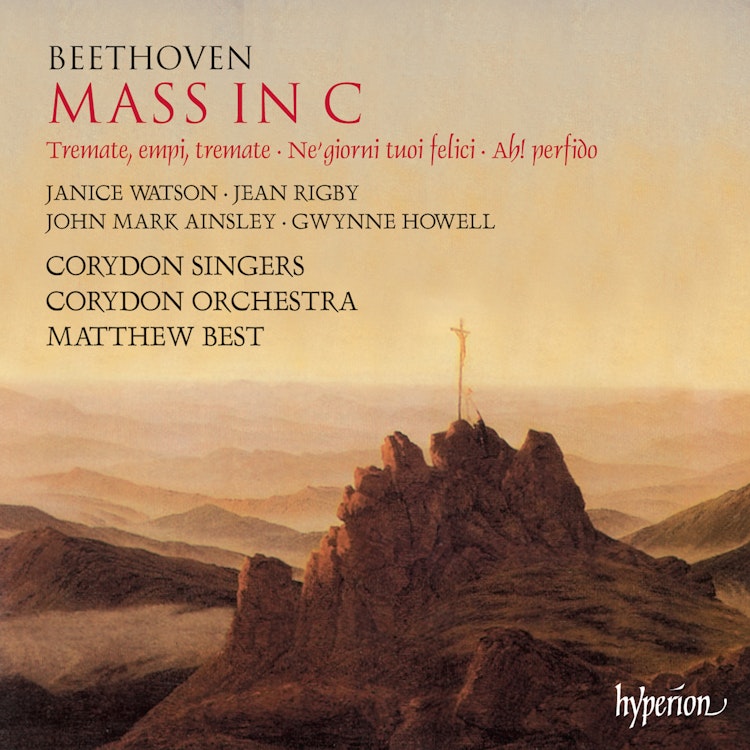
Beethoven: Mass in C Major; Ah! perfido; Tremate, Op. 116
9/29/2023, 10 Tracks, 1:14:29
Featuring
John Mark Ainsley
Janice Watson
Jean Rigby
Gwynne Howell
Matthew Best
Corydon Singers
Corydon Orchestra
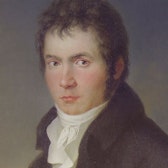
Ludwig van Beethoven
Did you know?
1/7
Compositional Technique
One of the most original aspects of the Mass in C is the reintroduction of the Kyrie music in the final bars, revealing a hidden motivic relationship and an epiphany of peace.
Compositional Technique
The Mass in C reveals an intensely personal and vividly dramatic response to liturgical texts, such as the four-fold repetition of "Credo" that suggests a belief struggling for self-acceptance.
Composition History
Beethoven composed Ah! perfido in Prague in 1796 as his most outstanding contribution to the concert aria genre, intended for concert performance rather than on stage.
Composition History
Beethoven composed the Mass in C in 1807 on commission from Prince Nikolaus Esterházy, but the Prince was disappointed with it, leading Beethoven to suppress the dedication to him.
Composer's Artistic Vision
Beethoven claimed to have treated the Mass text in an original manner, stating, "I think that I have treated the text in a manner in which it has rarely been treated."
Critical Reception
The Mass in C failed to find much favor with writer and critic E.T.A. Hoffmann, who reviewed the published score in 1813 and later implied fundamental disapproval of Beethoven's sacred music.
Compositional Technique
Beethoven's Mass in C features a dramatic intrusion of "Agnus Dei… miserere nobis" into the "Dona nobis pacem," a parallel to the eerie return of the Scherzo material in his Fifth Symphony.
You might also enjoy...
Briceño: El Fenix de Paris
Joculatores Upsalienses: Four Seasons (The)
Bernhard, C.: Sacred Harmonies
Al Ayre Espanol Edition
Joculatores Upsalienses: Woods, Women and Wine
Bolivian Baroque Vol 2: Music from the Missions and La Plata
Ignacio Jerusalem: Musicisti pugliesi in archivi ibericia
Christmas In Darmstadt (Noël À Darmstadt) Vol. 3
Sacra Partitura
Sinners & Saints: The Ultimate Medieval & Renaissance Music Collection
¡Ay Amor! Spanish 17th Century Songs & Theatre Music